
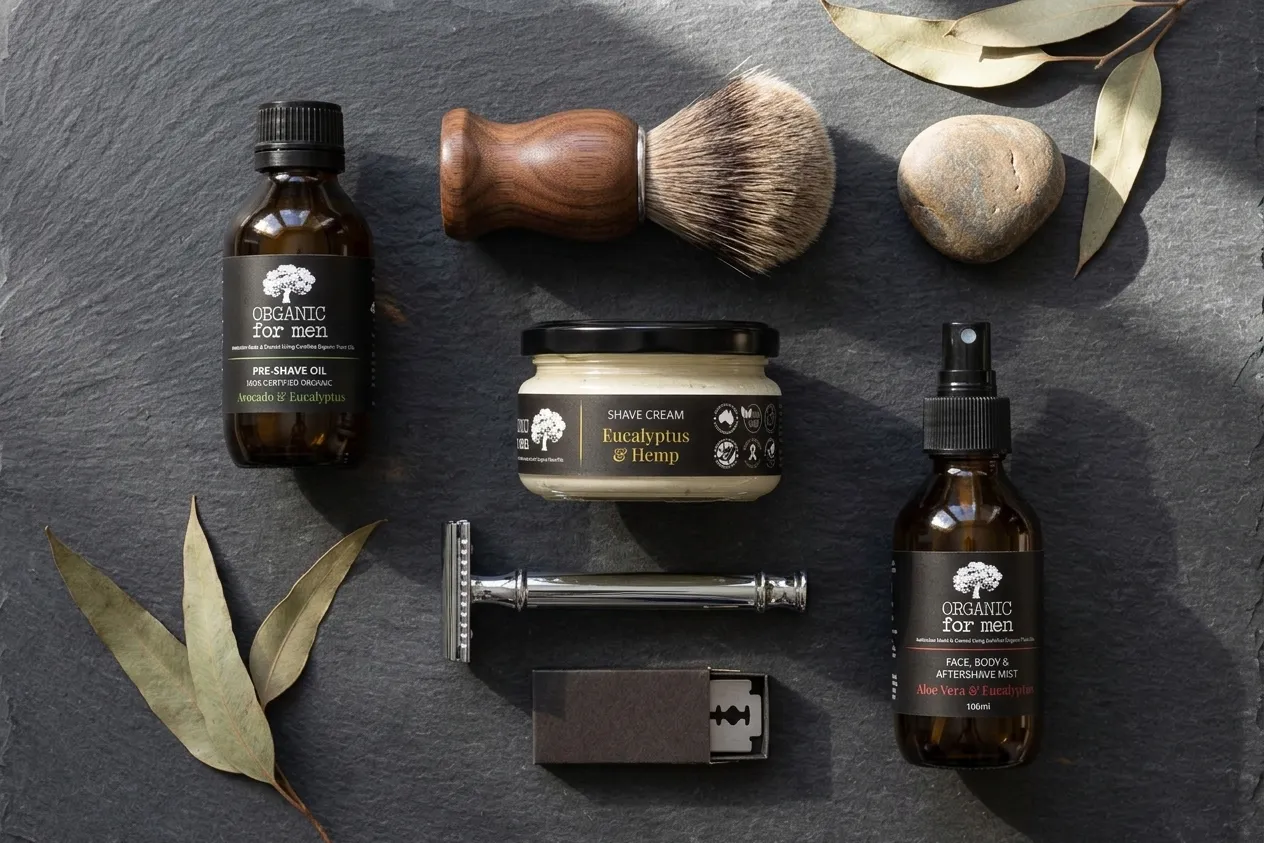
| Phase | Step | Product Needed | Time |
|---|---|---|---|
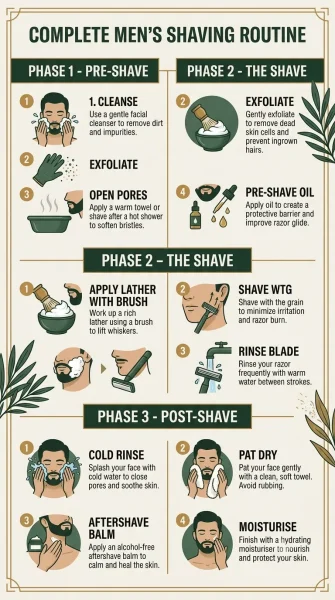
| PRE-SHAVE | 1. Cleanse face | Face wash | 1 min |
| 2. Exfoliate (2–3x/week) | Facial scrub | 1 min | |
| 3. Open pores | Warm shower or hot towel | 2 min | |
| 4. Apply pre-shave oil | Pre-shave oil | 30 sec | |
| THE SHAVE | 5. Apply lather | Shaving cream/soap + brush | 1 min |
| 6. Shave WTG | Razor | 2–5 min | |
| 7. Second pass if needed | Re-lather + razor | 2 min | |
| POST-SHAVE | 8. Cold water rinse | — | 30 sec |
| 9. Pat dry | Clean towel | 30 sec | |
| 10. Apply aftershave balm | Aftershave balm | 30 sec | |
| 11. Moisturise | Facial moisturiser | 30 sec |
Total time: 10–15 minutes for a full, unhurried shave. That includes every step.
Most men shave almost every day of their adult lives. That’s thousands of shaves — and yet most blokes have never been properly shown how to do it right.
If you’re dealing with razor burn, redness, ingrown hairs or skin that feels raw after every shave, the problem usually isn’t your razor. It’s your routine.
A proper men’s shaving routine has three distinct phases: pre-shave preparation, the shave itself, and post-shave aftercare. Miss any one of them and you’ll pay for it with irritated, unhappy skin.
In this guide, we’ll walk you through every step — from the moment you splash water on your face to the final swipe of moisturiser — so you can shave smarter, not harder.
Shaving isn’t just grooming — it’s a mechanical process that removes not only hair but also the very top layer of your skin. Every time you drag a blade across your face, you’re creating micro-stress on the surface. Without the right preparation and aftercare, that stress builds up as irritation, redness, razor bumps and dryness.
In Australia, this is compounded by our climate. Intense UV exposure, dry air across most of the country, and hard water in cities like Melbourne and Sydney all put extra pressure on men’s skin. A lazy shave routine that might be “fine” elsewhere becomes a genuine skin problem here.
The good news? A proper shaving routine doesn’t take significantly longer. It just takes the right steps in the right order.

Here’s the honest truth: if you’re shaving without any preparation, you’re making the job harder than it needs to be — and damaging your skin in the process.
Facial hair is significantly coarser than the hair on your head. Dry, unprepared hair resists a blade. That resistance means more passes of the razor, more pressure, more friction — and all of that adds up to irritation, razor burn, and ingrown hairs.
A solid pre-shave routine softens the hair shaft by up to 70%, opens pores, and creates a protective barrier between your skin and the blade. The result? A closer, more comfortable shave with far less irritation.
Here’s how to do it properly.
Before anything touches your face, wash it. Use a gentle face wash to remove excess oil, dead skin cells, environmental pollutants and bacteria. These all create an uneven surface that causes the razor to drag and skip.
Choose a cleanser designed for men’s skin — male skin is naturally oilier and thicker than female skin, so the formulation matters. Avoid anything with harsh sulfates that strips the skin’s natural oils.
Key tip for Australian men: Hard water and high UV levels mean your skin is likely working overtime to maintain its barrier. A mild, pH-balanced face wash protects that barrier rather than stripping it.
Explore our organic face care range, formulated specifically for Australian men’s skin.
Exfoliation before shaving is one of the most underrated steps in a man’s grooming routine.
A facial scrub lifts dead skin cells off the surface, frees any hairs that are beginning to curl back into the skin (the cause of ingrown hairs), and gives your razor a cleaner path to follow. The result is a noticeably closer, smoother shave with fewer passes needed.
How often: Two to three times per week is the sweet spot. Over-exfoliating irritates and damages the skin barrier — especially with Australia’s UV-heavy environment.
How to do it: After cleansing, apply a small amount of scrub and work it into the skin in small circular motions. Focus on areas prone to ingrown hairs — typically the neck and jawline. Rinse thoroughly before moving to the next step.
Looking for healthier, smoother skin? Start by learning the proper exfoliation frequency in How Often Should Men Exfoliate?
This is the step that separates a mediocre shave from a great one.
Heat softens the hair follicle, swells the hair shaft slightly (making it easier to cut cleanly) and opens the pores so the razor can reach the hair at the right angle. The easiest way to do this is to shave after a warm shower.
If you prefer to shave before a shower or at the sink, use the hot towel method:

This is the step that will genuinely change how your shave feels — and most men have never heard of it.
Pre-shave oil creates a thin, protective layer between your skin and the razor blade. It dramatically reduces friction, protects the skin during the pass of the blade, and helps the razor glide rather than drag.
It’s especially important if you have:
The best ingredients to look for in a pre-shave oil:
| Ingredient | Benefit |
|---|---|
| Jojoba Oil | Closely mimics skin’s natural sebum; non-greasy |
| Argan Oil | Rich in vitamin E; anti-inflammatory |
| Sweet Almond Oil | Lightweight; softens hair and skin |
| Castor Oil | Creates a protective film; helps razor glide |
| Sesame Oil | Antioxidant-rich; absorbs well |
How to apply pre-shave oil:
Shop our Avocado & Eucalyptus Pre-Shave Oil cold-pressed certified organic plant oils, Australian made.
Your razor is the most important tool in this whole process — and the right choice depends on your skin type, experience level and how close a shave you’re after.
| Razor Type | Best For | Pros | Cons |
|---|---|---|---|
| Safety Razor | Experienced shavers, eco-conscious men | Very close shave, cost-effective long-term, less plastic waste | Learning curve required |
| Cartridge Razor | Beginners, quick daily shavers | Easy to use, forgiving | Cartridge replacement costs add up; multiple blades can increase irritation |
| Straight Razor | Enthusiasts, barber-style shave | Closest possible shave | Significant skill and maintenance required |
| Electric Razor | Men with sensitive skin, busy schedules | Fast, no water needed | Less close; can still cause irritation on sensitive skin |
For most men, a quality safety razor paired with the right products gives the best combination of closeness, cost and skin health.
Once your pre-shave oil is on, it’s time to apply your shaving medium. The job of shaving cream or soap is to:
Shaving cream vs. shaving soap — what’s the difference?
Why choose natural or organic shaving cream?
Conventional shaving products often contain synthetic fragrances, sulfates, parabens and alcohol — all of which can strip and irritate the skin. Natural alternatives use plant-based ingredients that cushion and nourish at the same time.
For Australian men dealing with UV-stressed skin, this is particularly important. Your skin needs to recover and rebuild — not be further stripped by harsh chemicals.
Browse our Organic Shaving Cream formulated with certified organic plant extracts.
A shaving brush might feel old-fashioned, but it’s genuinely one of the most effective upgrades you can make to your shave routine.
What a good shaving brush does:
How to use a shaving brush properly:
Find a perfect shaving brush at Organic for Men.
This is where most men make their biggest mistakes. Technique matters far more than how expensive your razor is.
The four golden rules of shaving technique:
1. Always Shave With the Grain First (WTG)
“With the grain” means shaving in the same direction your facial hair grows. Always start here — especially on your neck, where the grain can change direction.
Shaving against the grain (ATG) cuts the hair shorter and closer but dramatically increases the risk of razor burn, ingrown hairs and skin irritation. If you want that extra closeness, do a second pass against or across the grain — but only after a first pass with the grain and a fresh application of lather.
2. Use the Right Angle
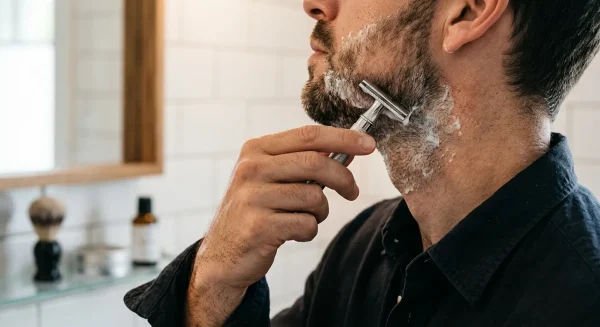
Hold your razor at approximately 30 degrees to your skin. Most men hold the razor too flat or too steep. At 30 degrees, the blade cuts efficiently without scraping or dragging.
3. Use Zero Pressure
Let the weight of the razor do the work. Pressing down is the number one cause of razor burn and cuts. A quality razor on well-prepared skin needs no pressure at all.
4. Use Short Strokes and Rinse Constantly
Use short strokes of 3–4 cm. After every stroke, rinse the blade under warm running water to clear accumulated hair and cream. A clogged blade drags and pulls — that’s what causes irritation, not the razor itself.
Step-by-step shaving sequence:
| Mistake | Why It Happens | What to Do Instead |
|---|---|---|
| Shaving on dry skin | Skipping prep steps | Always shave on clean, damp, prepped skin with lather |
| Pressing too hard | Thinking it gives a closer shave | Zero pressure — let the blade weight do the work |
| Using a blunt blade | Not replacing blades regularly | Replace after every 5–7 shaves (or once per week) |
| Shaving against the grain immediately | Wanting a quick close shave | Always WTG first; ATG only on a second pass |
| Skipping pre-shave oil | Not knowing it exists | Apply pre-shave oil every single time |
| Multi-pass without re-lathering | Being in a hurry | Always re-apply lather before a second pass |
| Rinsing with hot water at the end | Habit | Rinse with cold water to close pores |

Every shave — no matter how carefully done — disrupts the skin’s surface. The outermost layer (the stratum corneum) is partially removed alongside the hair. This leaves your skin temporarily more vulnerable to moisture loss, bacteria, and environmental damage.
Skip post-shave care and you’ll notice it: tightness, redness, dry patches, and that uncomfortable “burn” feeling that lingers for hours.
The goal of post-shave care is simple: calm the skin, close the pores, restore moisture, and protect the barrier you’ve just temporarily compromised.
Immediately after finishing your shave, rinse your face thoroughly with cold water. This is a step most men skip or do half-heartedly — don’t.
Cold water does three things:
Take your time here. Rinse until the water runs clean and you’ve removed every last trace of shaving cream.
Rubbing a towel across freshly shaved skin is a surprisingly common cause of post-shave irritation. Instead, pat your face dry gently with a clean, soft towel. The skin is temporarily more sensitive after shaving — treat it accordingly.
Here’s an important distinction: aftershave balm and aftershave splash are not the same thing.
Traditional aftershave splashes contain high levels of alcohol, which does kill bacteria but also aggressively dries and stings the skin. For men with sensitive or dry skin — or really, for most men — this is counterproductive.
Aftershave balm is the modern, skin-friendly upgrade. A good aftershave balm:
What to look for in an aftershave balm:
| Ingredient | What It Does |
|---|---|
| Aloe Vera | Immediate cooling, anti-inflammatory, hydration |
| Witch Hazel (alcohol-free) | Gentle astringent; reduces redness without stripping |
| Chamomile Extract | Calms irritated skin |
| Vitamin E | Antioxidant protection, supports skin repair |
| Jojoba or Argan Oil | Deep moisture without greasiness |
How to apply aftershave balm:
Shop our Australian made Face, Body & Aftershave Mist, formulated with certified organic botanicals.
Aftershave balm and moisturiser serve different purposes — you need both.
Your aftershave balm calms and soothes. Your moisturiser hydrates and protects for the hours ahead.
Apply a light-to-medium weight facial moisturiser after the balm has fully absorbed. For Australian men, choose one that contains SPF or apply sunscreen separately — UV exposure is the number one cause of premature skin ageing in Australia, and freshly shaved skin is particularly vulnerable.
Explore our Skincare Products including moisturisers designed for men’s skin.
Even with perfect technique, razor burn and ingrown hairs can happen — especially on the neck, where the grain direction is inconsistent.
For razor burn:
For ingrown hairs:
No two men’s skin is the same. Here’s how to adapt the routine to your specific skin type.
Sensitive skin reacts to almost everything — fragrances, alcohol, multi-blade razors, even hard water. The good news is that a careful, natural routine dramatically reduces this.
Our natural shaving range is formulated without synthetic fragrances, sulfates or parabens — ideal for sensitive skin.
Oily skin is generally more resilient but prone to breakouts and clogged pores after shaving.
Dry skin loses moisture quickly — shaving accelerates this.
If you maintain a beard rather than shaving everything off, the pre-shave and post-shave principles still apply — they just apply to the areas you do shave (cheeks, neck, neckline).
Read our complete beard care routine — covering trimming, shaping, washing and moisturising your beard.
This is worth addressing directly — because there’s a real difference between conventional shaving products and natural alternatives, especially in the Australian context.
Most supermarket shaving products are formulated for a global market and a standardised consumer. They typically contain:
For Australian men dealing with high UV exposure, dry seasonal conditions, and hard water, these ingredients make an already challenging environment worse.

Natural and organic shaving products work differently:
Organic for Men is Australian made and owned, with certified organic plant oils and extracts at the core of every product. Formulated with the specific demands of Australian skin and climate in mind.
Explore our Natural & Organic Shaving Essentials for Men
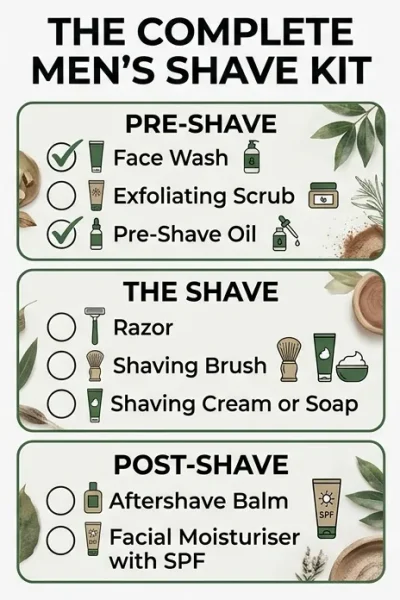
PRE-SHAVE
THE SHAVE
POST-SHAVE
The honest answer: it depends entirely on your hair growth rate, skin tolerance and the look you’re going for. There is no universal rule.
| Growth Rate / Skin Type | Recommended Frequency |
|---|---|
| Fast growth, resilient skin | Daily |
| Moderate growth, normal skin | Every 1–2 days |
| Slow growth or sensitive skin | Every 2–3 days |
| Beard maintenance (edges only) | 1–2 times per week |
One rule that does apply universally: no matter how often you shave, never skip the pre-shave and post-shave steps. Shaving on unprepared skin without aftercare is what causes most of the irritation men put up with unnecessarily.
You don’t need a complicated routine or a shelf full of products to shave well. You need the right steps, in the right order, with products that work with your skin rather than against it.
At Organic for Men, every product in the shave range is formulated with cold-pressed certified organic plant oils and botanical extracts — no synthetic fragrances, no sulfates, no parabens. Made in Australia, for Australian men.