
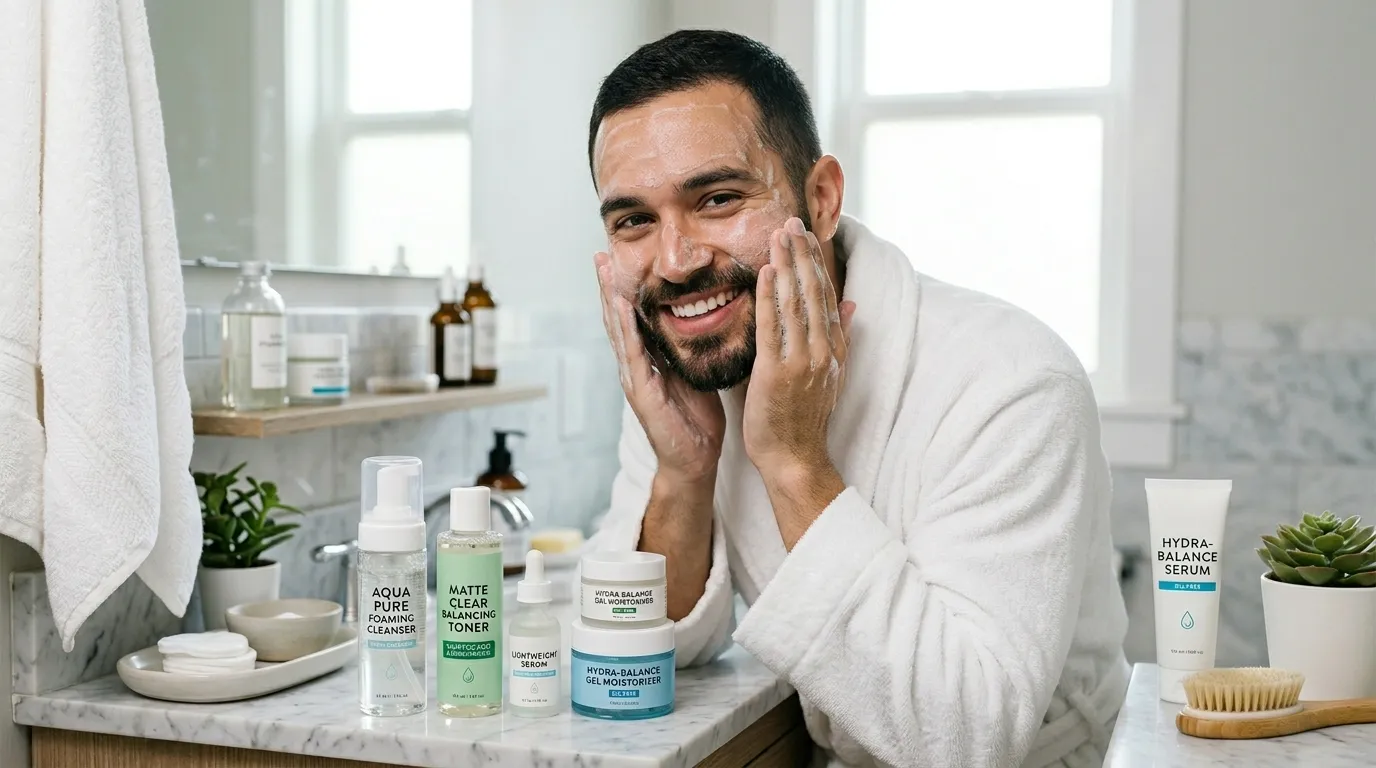
Oily skin usually happens when your skin produces excess sebum, leading to shine, clogged pores, and frequent breakouts. The good news is that the right skincare routine can help reduce oil production and keep your skin balanced without over-drying it.
The best oil-control skincare routine is actually simple. It focuses on balancing oil production, keeping pores clear, and protecting your skin without stripping it.
In this guide, you’ll learn exactly how to build a routine that works, morning and night.
If you’re looking for a more complete overview, you can also explore a full step-by-step skincare routine for men to understand how everything fits together.
Oily skin happens when your sebaceous glands produce excess sebum (natural oil). While sebum is essential for protecting your skin, too

much of it leads to shine, clogged pores, and acne.
Common causes include:
One important thing to understand: trying to completely remove oil often makes things worse.
A common mistake is thinking oily skin needs aggressive cleansing and drying products.
In reality, stripping your skin triggers it to produce even more oil to compensate. This leads to a cycle of:
dry → irritated → even more oily
The goal isn’t to remove oil completely, it’s to balance it.
If you’re still unsure why having a routine matters at all, our article why men need a skincare routine helps to understand more
Here’s a simple, effective routine you can follow daily:
Start with a gentle cleanser that removes excess oil, dirt, and sweat without over-drying your skin.
Look for:
Avoid harsh soaps or alcohol-based cleansers.
Harsh cleansers can damage the skin barrier and disrupt the acid mantle, which leads to irritation and makes greasy skin harder to manage.
If your skin still feels greasy after a few hours, switching to a gentle cleanser designed for oily skin can make a noticeable difference.
A product like Face & Beard Wash – Dessert Lime & Avocado is a good example of a gentle cleanser that removes excess oil without stripping your skin.
Exfoliating helps remove dead skin cells that can clog pores and cause breakouts.
Best options for oily skin:
Over-exfoliating can irritate your skin and increase oil production, so keep it controlled.
Most men either over-exfoliate or skip it completely. Discover the ideal exfoliation routine for your skin type.
A well-formulated exfoliator can help keep pores clear without irritating your skin.
Looking for the best exfoliator for men? Discover which ingredients and exfoliating products actually work for smoother, clearer skin.
A good toner can help remove leftover impurities and lightly control oil.
Look for:
This step is optional, but useful if your skin feels greasy during the day.
Serums are where you solve specific problems like acne, enlarged pores, or excess oil.
Great ingredients:
Use a small amount, serums are highly concentrated.
If you’re dealing with frequent breakouts or visible pores, adding a targeted face serum for oily skin can significantly improve your results over time.
Yes, even oily skin needs a moisturiser.
Skipping this step can actually make your skin produce more oil to compensate.
Choose:
This helps keep your skin hydrated without feeling greasy.
Using a lightweight moisturiser that won’t clog pores helps your skin stay balanced without adding extra shine.
Sunscreen is essential, even for oily skin.
Look for:
A good sunscreen protects your skin without adding shine.
Here’s a simple breakdown of the ideal morning and night skincare routine for oily skin, This structure helps reduce excess oil while keeping your skin balanced throughout the day.
Simple, consistent, and effective.
To understand the difference in more detail, you can check this guide on morning vs night skincare routine for men and what to use when.
Avoid these if you want real results:
Small habits can make a big difference.
If you’re choosing products, look for these in the table below:
|
Niacinamide
|
Primary Benefit
Controls Sebum
|
Why It Works
A form of Vitamin B3 that regulates oil production and minimizes the appearance of pores.
|
|
Salicylic Acid
|
Primary Benefit
Deep Cleaning
|
Why It Works
A Beta-Hydroxy Acid (BHA) that is oil-soluble, allowing it to penetrate deep into pores to dissolve “glue” and debris.
|
|
Clay (Kaolin/Bentonite)
|
Primary Benefit
Immediate Matting
|
Why It Works
Acts like a vacuum for your face, physically drawing out and absorbing excess surface oil.
|
|
Tea Tree Oil
|
Primary Benefit
Clarifying
|
Why It Works
Naturally antimicrobial and anti-inflammatory; it helps soothe redness and keep acne-causing bacteria at bay.
|
|
Hyaluronic Acid
|
Primary Benefit
Oil-Free Hydration
|
Why It Works
Even oily skin needs water. This provides lightweight hydration without adding any grease or heaviness.
|
These ingredients are widely used because they actually work.
Some ingredients can make oily skin worse:
Always check labels before buying.
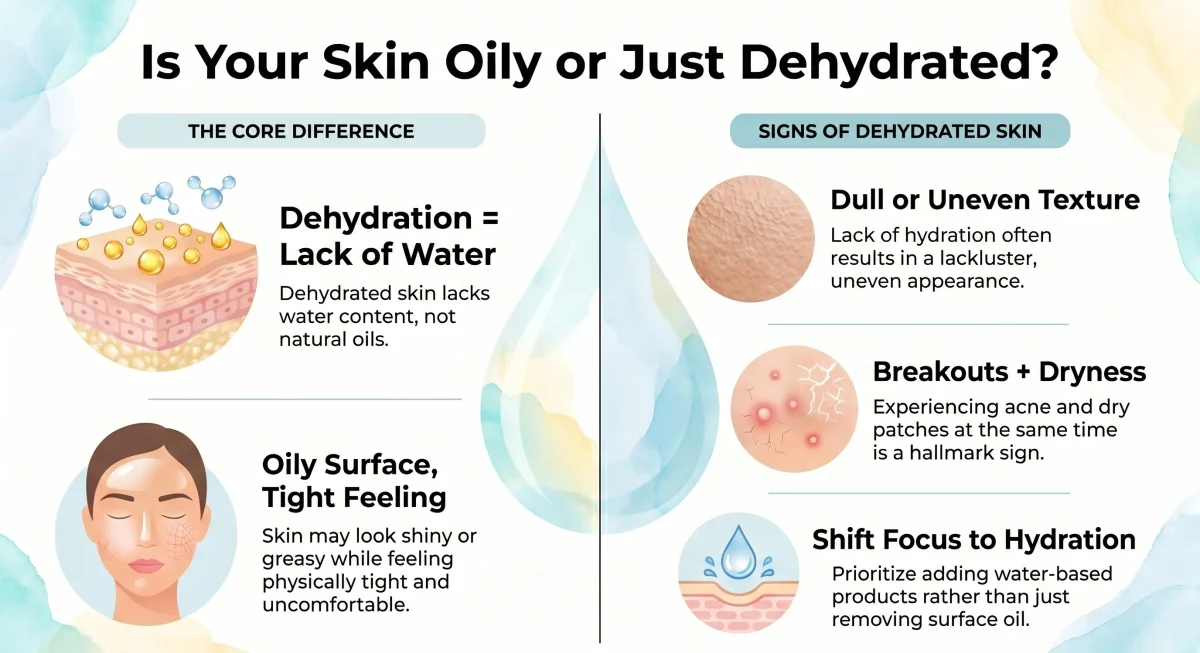
Many people think their skin is oily, but it’s actually dehydrated.
If you’re not completely sure about your skin type, this simple guide on how to identify your skin type can help you get it right.
Dehydrated skin lacks water, not oil.
Signs include:
If this sounds familiar, focus more on hydration rather than removing oil.
You can also support your skin with simple habits:
These won’t replace skincare, but they help.
When choosing products, focus on:
A simple routine with the right products is far more effective than using too many.
To simplify your routine, you can explore our best skincare range for oily skin and build a routine that actually works together.
Oily skin treatment doesn’t require a complicated routine or expensive products.
What works is consistency, the right ingredients, and a simple approach.
Stick to a routine that cleans, balances, and protects your skin, and over time, you’ll notice less shine, fewer breakouts, and healthier-looking skin.
When choosing a practical present for a father who enjoys looking after his skin, grooming products can be a thoughtful option. From daily skincare essentials to simple self-care products, there are plenty of grooming gift ideas that can suit different routines and preferences. Our guide to Best Father’s Day Grooming Gifts for Men in Australia explores practical options that combine everyday use with personal care.
Helpful guide. I was searching for how to fix oily face and this article explained it in a straightforward way without overcomplicating things.