
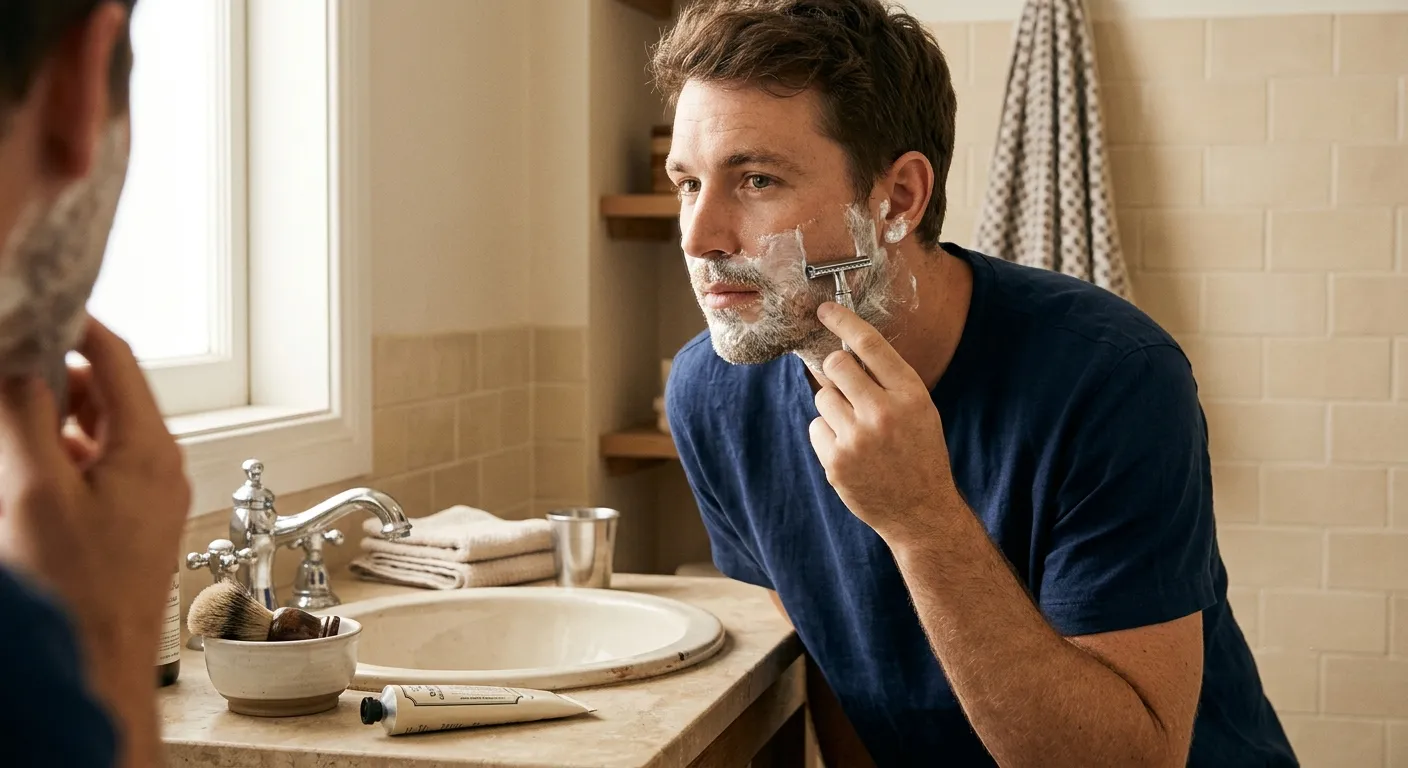
This guide breaks down exactly what’s happening to your skin, what’s actually causing it (it’s rarely just “sensitive skin”), and the specific prep, technique, and aftercare changes that stop it — based on dermatological guidance, not just grooming folklore.
Razor burn appears within minutes of shaving and causes redness, stinging, and irritation on the skin’s surface. Ingrown hairs usually develop one to three days later when cut hairs curl back into the skin. While both are caused by shaving, they require different prevention and treatment approaches.
| Question | Short Answer |
|---|---|
| What’s the difference? | Razor burn is surface irritation that appears immediately; ingrown hairs take 1–3 days to develop as a hair curls back into the skin |
| Main cause | Shaving dry, dull blades, shaving against the grain, or pressing too hard |
| Fastest fix for razor burn | Cold water rinse + alcohol-free, fragrance-free aftercare |
| Fastest fix for ingrown hairs | Stop shaving the area for a few days; never pick or dig |
| Best prevention | A proper pre-shave, shave, and aftercare routine — not just a better razor |
Knowing which one you’ve actually got changes how you treat it — using ingrown hair treatment on plain razor burn (or vice versa) is a common reason the irritation drags on for weeks instead of clearing in a day or two.
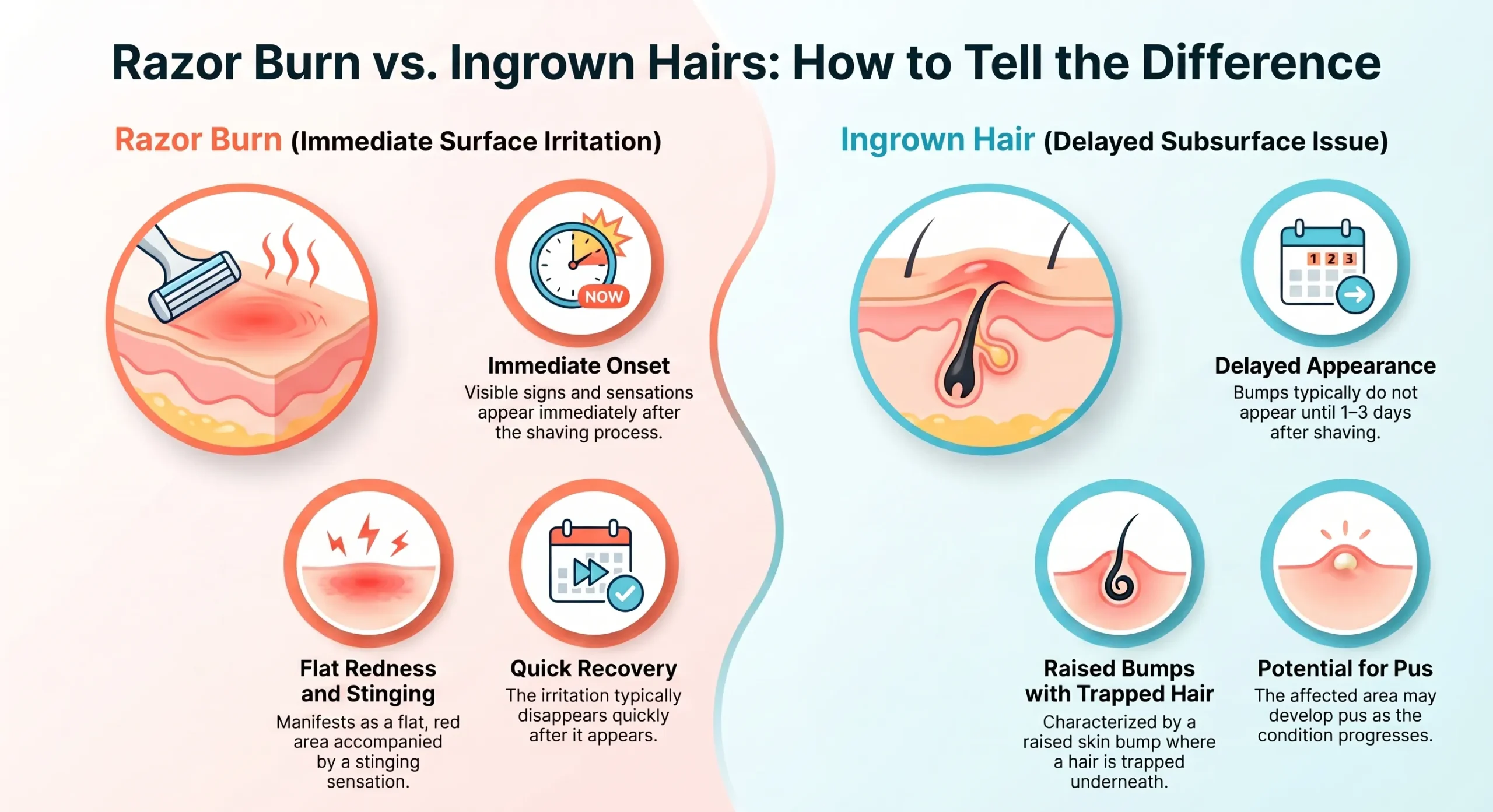
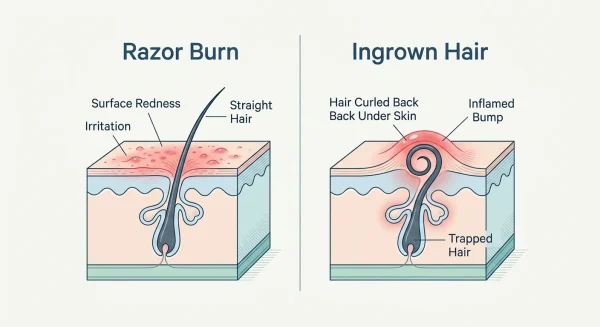
Razor burn is surface-level irritation — redness, tightness, stinging, and sometimes small red bumps that show up within minutes to an hour of shaving. It’s essentially mild friction damage to the top layer of skin, similar to a rug burn, and it usually settles down within a day with the right aftercare.
An ingrown hair happens when a cut hair curls back and re-enters the skin instead of growing outward, creating a small, often inflamed bump — sometimes with visible pus — that typically appears one to three days after shaving, not immediately. According to healthdirect , ingrown hairs are especially common after shaving and are more likely in people with coarse or curly facial hair, since the cut ends are sharper and curl back more easily. When this becomes a chronic, recurring pattern along the jawline, it’s sometimes called pseudofolliculitis barbae, and it’s worth a chat with a doctor or dermatologist if it keeps happening.
Most irritation traces back to one (or several) of these five habits — and it’s rarely the razor brand that’s actually at fault.
Shaving against the direction your hair grows gives a closer shave, but it also cuts hair at a sharper angle and pulls at the follicle, which is one of the single biggest causes of both razor burn and ingrown hairs.
A dull blade doesn’t cut cleanly — it drags and tugs at the hair, forcing you to go over the same area multiple times, which multiplies friction and irritation. A blade with old lather and bacteria sitting in it also raises the risk of infected ingrown hairs.
Dry hair is roughly 30% harder to cut cleanly than hair that’s been softened with water and oil, so shaving dry (or straight after waking up, before your skin has hydrated) is a fast track to burn.
Pressing hard to “get it all in one go” doesn’t give a closer shave — it just pushes the blade harder into skin that’s already been weakened by the first pass, which is exactly how burn starts.
Some men are simply more prone to ingrown hairs because of naturally curly or coarse facial hair — this isn’t a technique failure, it’s biology, and it means the prevention routine below matters even more.
Warm water softens the hair shaft and hydrates the outer layer of the skin, making hair easier to cut with less resistance. If you shave before showering, at minimum splash the area with warm water for 60 seconds and keep it wet throughout.
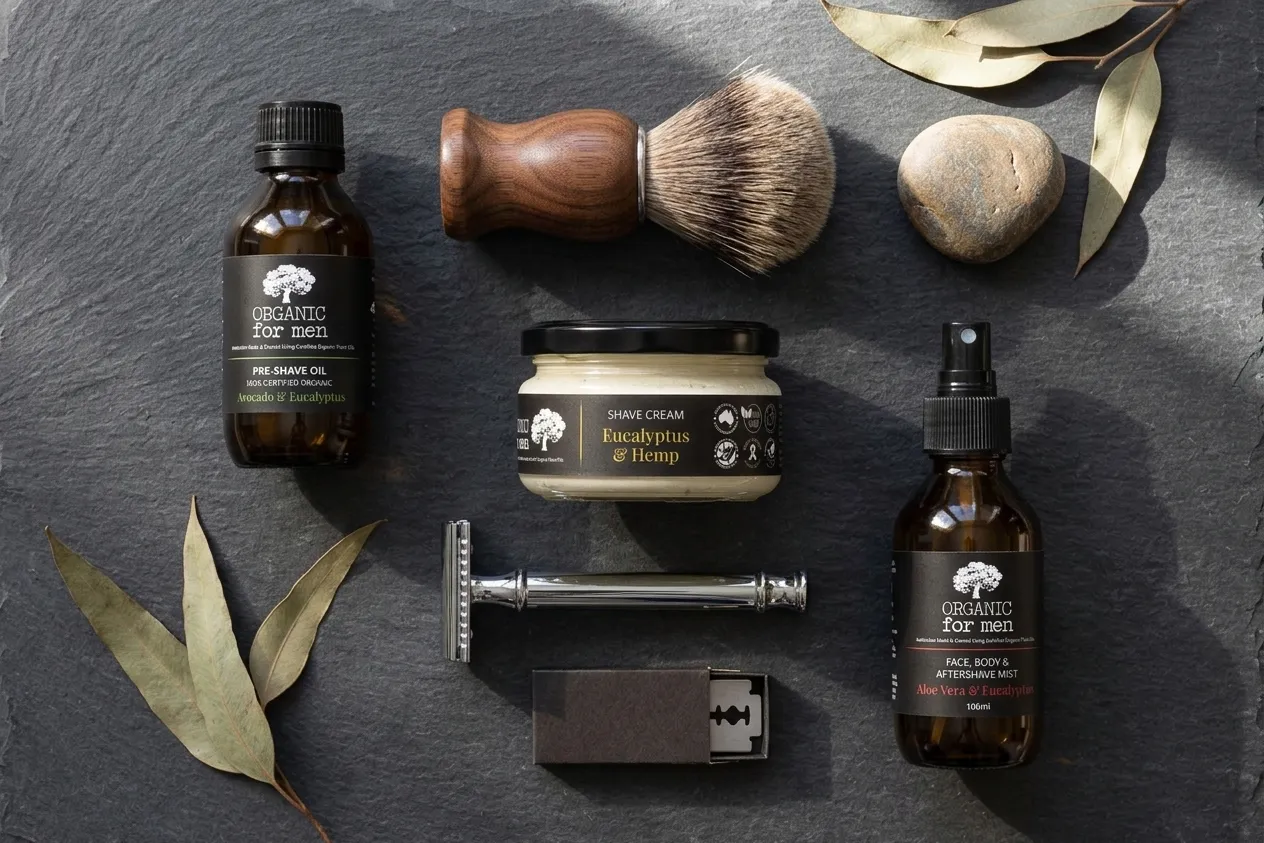
A pre-shave oil sits between the skin and the blade, softening stubble and letting the razor glide instead of drag — this single step prevents a huge share of the tugging that causes both burn and ingrown hairs, and it matters most if you have coarse or curly hair.
Aerosol foams and bar soap both sit on top of the skin rather than hydrating it. A shaving cream worked up with a shaving brush lifts the hair away from the skin and creates a genuine protective cushion between blade and skin, rather than just masking the sound of the razor.
Identify which way your hair grows (run a hand over dry stubble — the direction it feels smoother is the grain) and do your first pass in that direction. If you want it closer, a light second pass across the grain is far gentler on skin than going directly against it.
The blade’s weight is enough — pressing harder doesn’t cut better, it just increases friction and the odds of nicks and burn.
A blade clogged with hair and lather stops cutting cleanly and starts dragging, which is when irritation begins.
A razor should generally be replaced every 5–7 shaves — a blade that’s gone dull is one of the most common (and most overlooked) causes of both razor burn and ingrown hairs.
Skin is at its most vulnerable in the minutes right after shaving — you’ve just removed a fine layer of it along with the hair — so this step matters as much as the shave itself.
Cold water helps close pores and calm surface redness immediately after shaving, before it has a chance to develop into full razor burn.
Traditional alcohol aftershaves sting and actively dry out skin that’s already compromised, which often makes irritation worse, not better. A Face, Body & Aftershave Mist with aloe vera cools and hydrates without the sting.
Aftershave alone isn’t enough; freshly shaved skin needs a proper moisturiser afterward to lock in hydration and support the skin barrier while it recovers, otherwise dryness sets in within hours and irritation returns.
For the complete step-by-step sequence, see ourShaving Routine guide.
Stick to cold water, a fragrance-free hydrating mist, and a light moisturiser for 24–48 hours, and avoid shaving the same area again until the redness has fully settled.
Leave it alone for a few days first — many ingrown hairs resolve on their own once the surrounding skin calms down. If it’s still visible near the surface after several days, gently exfoliating the area during a shower can help release it. Never dig, squeeze, or pick at an ingrown hair, because doing so can introduce bacteria and increase the risk of infection or scarring.
If a bump becomes increasingly painful, fills with pus, spreads to nearby follicles, or you’re dealing with the same pattern of ingrown hairs week after week, it’s time to see a GP rather than keep managing it yourself — recurring folliculitis or pseudofolliculitis barbae sometimes needs a treatment plan beyond routine changes.
Sweat sitting on freshly shaved skin is one of the more overlooked triggers for irritated, infected-looking bumps — and Australian summers make this an almost daily issue for anyone shaving before a hot commute or a day outdoors. If you’re prone to breakouts along the jawline in warmer months, shaving the night before rather than the morning of a hot day, and keeping a hydrating mist in your bag to use midday, both make a noticeable difference.
If shaving irritation keeps coming back, improving your preparation, shaving technique, and post-shave care is often more effective than simply changing razors. If you’re looking for plant-based products designed to support that routine, explore our Organic Shaving Collection or start with the Complete Hydrating Shave Kit.