
Quick Answer: Australian men have some of the highest skin cancer rates in the world, yet fewer than 1 in 3 wear sunscreen regularly. Men need sunscreen because Australia’s UV radiation is intense enough to damage skin year-round, male skin ages and burns just as easily as female skin, and daily SPF is one of the simplest habits that protects against skin cancer, premature ageing, and sunburn — no matter your skin tone or how much time you think you spend outdoors.
Most Aussie blokes grew up hearing “slip, slop, slap” in the schoolyard — but somewhere between childhood and adulthood, that habit quietly disappears for a lot of men. If you spend your weekends surfing, fishing, at the footy, or just walking the dog at lunchtime, this guide breaks down exactly why sunscreen matters, how Australia’s UV index actually works, and how to build sun protection into a grooming routine you’ll actually stick to.
Australia isn’t just “sunny” — it sits closer to the equator than most of the countries where global skincare advice is written, and the ozone layer over the Southern Hemisphere is naturally thinner. That combination means UV radiation here is genuinely more intense than in the UK, most of the US, or Europe, even on a day that doesn’t feel particularly hot.
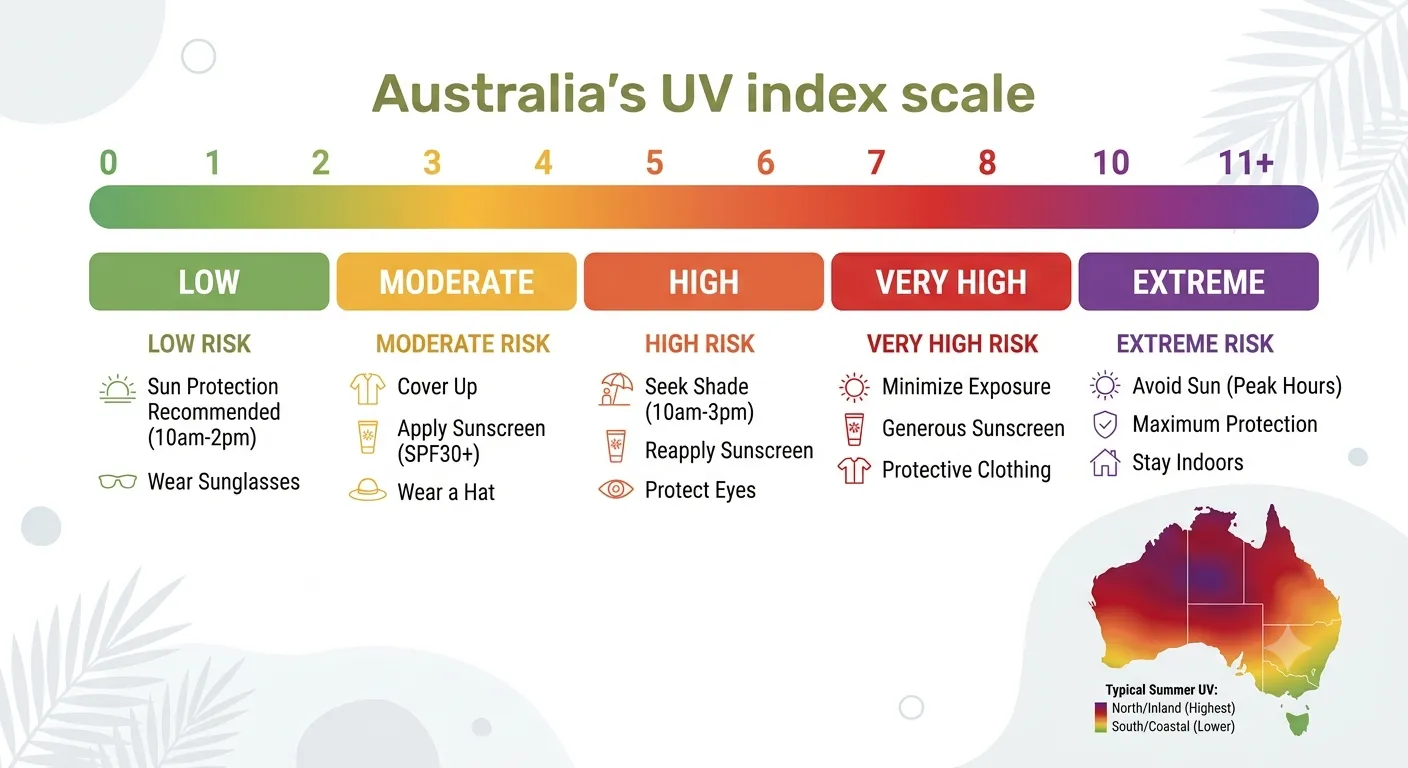
The UV Index measures the strength of UV radiation reaching the ground on a given day. It has nothing to do with temperature — you can get burnt on a cool, overcast day if the UV index is high, because it’s radiation, not heat, that damages your skin.
| UV Index | Risk Level | What It Means for You |
|---|---|---|
| 0–2 | Low | Minimal protection needed for most skin types |
| 3–5 | Moderate | Sun protection required |
| 6–7 | High | Sun protection essential, seek shade midday |
| 8–10 | Very High | Extra protection needed, avoid midday sun |
| 11+ | Extreme | Take all precautions, minimise outdoor exposure |
As a general rule, whenever the UV index hits 3 or above, sun protection is recommended — and in most of Australia, that’s most of the year, not just summer. You can check your local UV index for free via the Bureau of Meteorology or the SunSmart app.
The numbers are worth sitting with for a second:
If you’re curious about how sun exposure connects to broader skin issues Aussie men deal with — from dryness to breakouts — our guide on common skin problems in Australian men covers it in more depth.
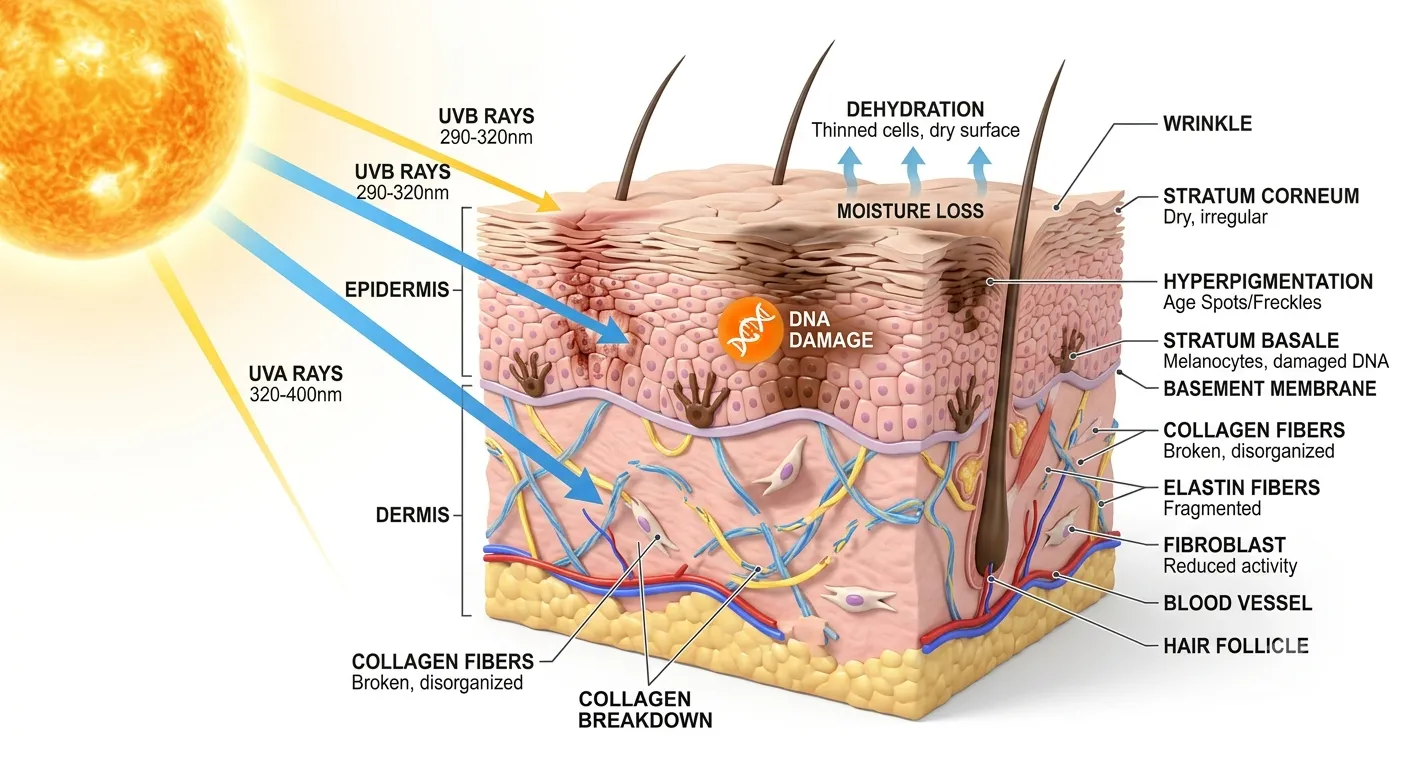
Sunscreen isn’t just about avoiding a burn today. UV radiation causes cumulative damage that builds up over years, even from exposure you don’t notice — like the drive to work or thirty minutes mowing the lawn.
| Type of Damage | Cause | What You’ll Notice |
|---|---|---|
| Sunburn | Short-term UVB overexposure | Redness, heat, peeling within 24–48 hours |
| Premature ageing | UVA breaking down collagen & elastin | Wrinkles, sagging, rough texture over time |
| Dark spots & pigmentation | UV triggering excess melanin | Uneven tone, sunspots on face, neck, forearms |
| Dehydration & barrier damage | UV drying out the skin’s surface | Tightness, flaking, increased sensitivity |
| Skin cancer risk | Long-term DNA damage in skin cells | Changing moles or spots — always get these checked |
Early signs of sun damage often develop gradually and may be easy to overlook. Watch for:
Because men’s skin tends to be thicker and produces more oil, damage isn’t always as visible early on — which is part of why so many men underestimate it until the signs show up later.
Sunlight contains two main types of ultraviolet radiation that affect your skin differently. Understanding the difference helps explain why broad-spectrum sunscreen is so important for Australian conditions.
| UVA | UVB |
|---|---|
| Causes ageing | Causes sunburn |
| Penetrates deeper | Damages surface |
| Present all year | Strongest in summer |
| Linked to wrinkles | Linked to burns |
A broad-spectrum sunscreen protects against both UVA and UVB, helping reduce the risk of premature ageing as well as sunburn.
The short answer is everyone. But some Australian men face a much higher level of UV exposure or have factors that increase their risk of long-term sun damage. If any of the following sound familiar, wearing sunscreen every day should be a non-negotiable habit.
Even if you don’t fit into any of these categories, Australia’s UV index frequently reaches levels where sun protection is recommended. For most men, sunscreen isn’t about your lifestyle—it’s about where you live.
Yes. In many parts of Australia, UV levels remain at 3 or above throughout winter, which means sunscreen is still recommended even when temperatures are low. Cooler weather doesn’t reduce ultraviolet radiation, and activities like driving, walking outdoors, or watching weekend sport can still expose your skin to harmful UV rays. Checking the daily UV Index is the best way to know when sun protection is needed.
| Myth | Reality |
|---|---|
| “My skin’s too tough to burn.” | Skin thickness affects texture, not UV vulnerability — everyone burns. |
| “I’ve got a tan, I’m already protected.” | A tan is visible skin damage, not protection — it offers only minimal natural SPF. |
| “It’s cloudy, I don’t need it.” | Up to 80% of UV radiation passes through cloud cover. |
| “I’m only outside for a few minutes.” | Damage is cumulative — short, repeated exposure adds up over a lifetime. |
| “Sunscreen is a summer thing.” | Australia’s UV index sits at 3+ most of the year in many regions. |
This is Cancer Council Australia’s core framework, and it’s still the simplest way to remember sun protection:
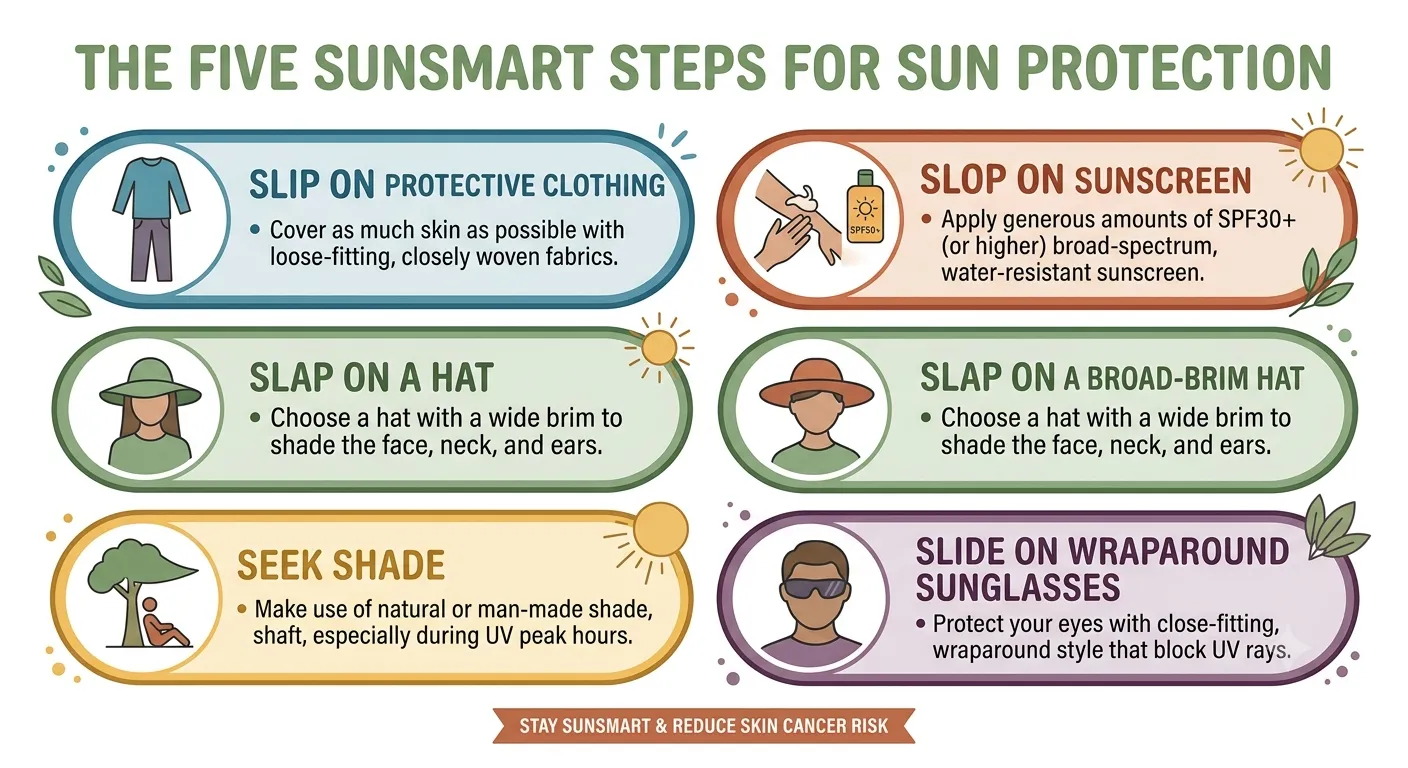
No single step covers you completely — sunscreen works best combined with the other four, not as a stand-alone fix.
Look for two things on the label: broad-spectrum (protects against both UVA and UVB rays) and SPF30 or higher — SPF50+ is the standard recommendation for Australian conditions. If you’re active outdoors, choose a water-resistant formula, and reapply after swimming, sweating, or towelling off regardless of what the label claims.
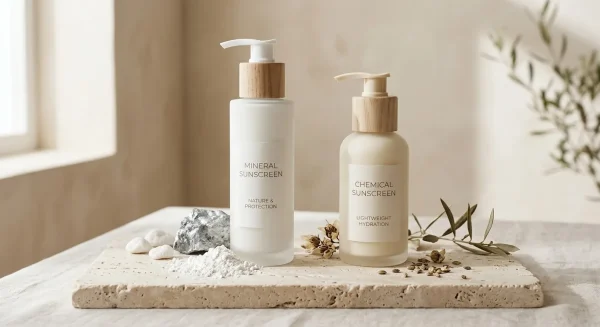
Men’s skin tends to run oilier and thicker than women’s, especially through the T-zone, so a heavy or greasy formula is often the reason blokes give up on sunscreen altogether. Look for lightweight, non-comedogenic formulas, and if you have a beard, pay close attention to the areas facial hair doesn’t fully cover — hairline, ears, and the exposed skin around the jaw.
If breakouts or oily skin are already a struggle, pairing sun protection with the right cleansing routine matters. Our Face & Beard Wash – Avocado & Lime is a good place to start your morning routine before sunscreen goes on.
Most men simply don’t use enough sunscreen, or don’t reapply often enough for it to keep working.
| Body Area | Recommended Amount | Reapplication |
|---|---|---|
| Face, neck & ears | ~1/2 teaspoon | Every 2 hours |
| Each arm | ~1 teaspoon | Every 2 hours |
| Each leg | ~1 teaspoon | Every 2 hours |
| Front & back of torso | ~1 teaspoon each | Every 2 hours |
| Whole body total | ~7 teaspoons (35ml) | Every 2 hours, or after swimming/sweating |
Apply sunscreen around 20 minutes before heading outdoors so it has time to settle, and don’t skip commonly missed spots — the back of the neck, tops of the ears, hairline, and tops of the feet.
Sunscreen works best as part of a full routine, not a single step bolted on at the last minute. Here’s how a sun-conscious grooming routine fits together:
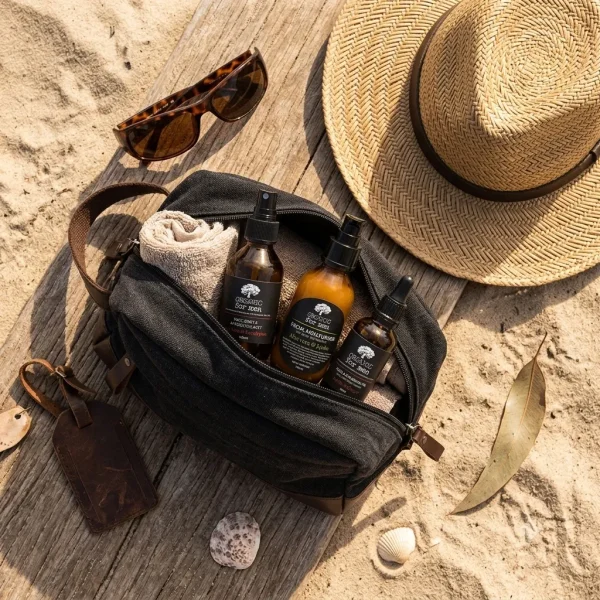
Want the full routine mapped out in order? Our complete body skin care guide for Australian men and body moisturiser guide both build on the same before/during/after approach.
Prefer to skip the guesswork? The Complete Skincare Set for Men bundles cleanser, moisturiser, and serum into one routine — or browse the full Face range to build your own.
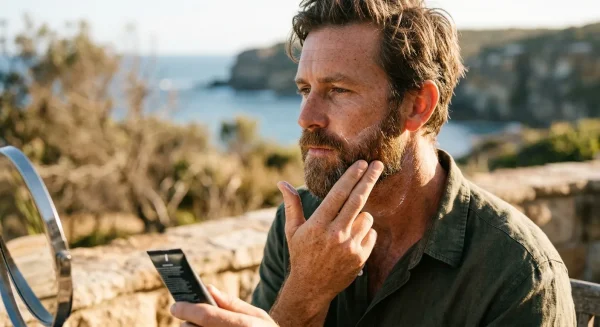
Facial hair doesn’t fully protect the skin underneath it from UV radiation, and beards can trap heat and sweat, which sometimes causes sunscreen to break down faster. If you’re growing or maintaining a beard:
Daily sunscreen isn’t about adding another complicated step to your morning—it’s about protecting your skin from damage that’s often invisible until years later. In Australia, where UV levels remain high for much of the year, making SPF part of your daily routine is one of the simplest ways to reduce your risk of sunburn, premature ageing, and skin cancer.
For the best protection, choose a broad-spectrum SPF30+ or SPF50+ sunscreen, apply it generously, reapply every two hours when outdoors, and combine it with protective clothing, shade, a hat, and sunglasses. Small habits today can make a significant difference to your skin health for years to come.
If you’re ready to make sunscreen part of your daily routine, explore our Shop to build a simple routine that works for Australian conditions.
This article provides general information and is not medical advice. For concerns about skin changes, moles, or sunburn, consult a doctor or dermatologist. For up-to-date UV index data, check the SunSmart app or Bureau of Meteorology.