
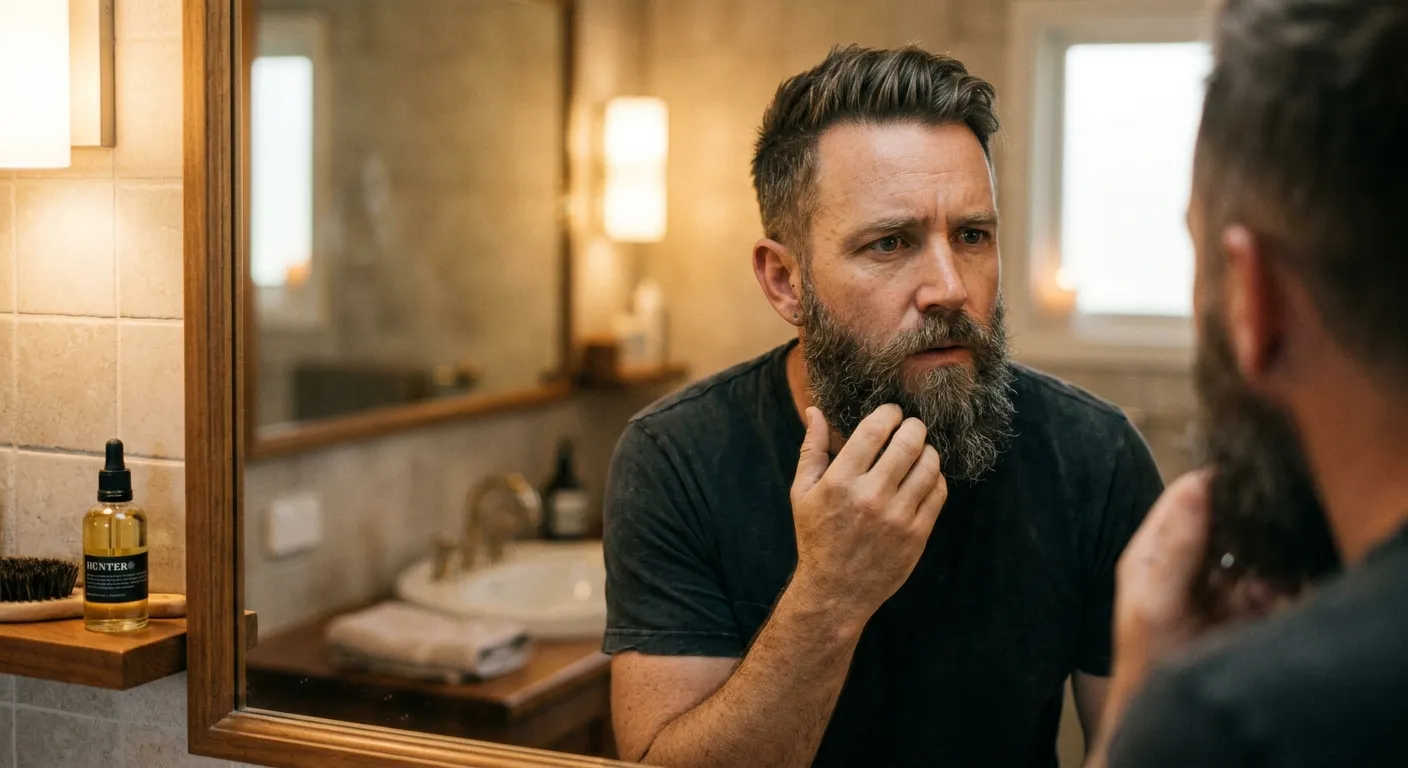
White flakes on your collar, an itch you can’t quite reach, and a beard that looks dull no matter how much oil you put on it — beardruff is one of the most common (and most misunderstood) beard problems out there. Most guides either tell you it’s “just dry skin, use more oil” or push you straight to a medicated antifungal shampoo. Neither answer is complete on its own.
Beardruff is dandruff that develops beneath facial hair, most commonly caused by a combination of excess oil, Malassezia yeast, and irritation of the skin. Unlike simple dry skin, beardruff often includes redness and persistent itching.
This guide explains what’s actually happening under your beard, how to tell beardruff apart from plain dry skin, and the exact routine — including when natural care is enough and when it isn’t — that clears it up and keeps it from coming back.
| Question | Short Answer |
|---|---|
| What is beardruff? |
Flaking, itching, and irritated skin beneath facial hair, most commonly associated with seborrhoeic dermatitis and the overgrowth of naturally occurring Malassezia yeast. |
| Is it the same as dry skin? | Not quite — dry skin flakes are small and powdery; beardruff flakes are often larger, oilier, and come with redness or itch |
| What’s the most effective first step? | A consistent beard care routine including gentle cleansing, moisturising, and regular exfoliation |
| Do I need medicated shampoo? | Only if a natural routine doesn’t improve things after 3–4 weeks |
| Will shaving fix it? | Temporarily hides it, but doesn’t treat the underlying cause — it usually returns once the beard grows back |
Beardruff is a form of dandruff (often linked to seborrhoeic dermatitis) that affects the skin beneath facial hair, causing flakes, itching, redness, and irritation.
Plain dry skin under the beard produces small, dry, powdery flakes with no redness — usually a direct result of not enough moisture reaching the skin. Beardruff (true beard dandruff) tends to show larger, sometimes slightly oily flakes, often paired with redness, itch, or a mild rash along the jawline. The distinction matters because dry skin responds to hydration alone, while beardruff usually needs a more active routine to fully clear.
Nearly everyone’s skin carries a yeast called Malassezia, which feeds on the natural oils (sebum) your skin produces. In some men, this yeast overgrows and breaks sebum down into a byproduct that irritates the skin barrier — leading to the flaking, redness, and itch known medically as seborrhoeic dermatitis. Beard hair makes an ideal environment for this: it traps heat, moisture, and oil close to the skin, which is exactly the setting Malassezia thrives in. According to healthdirect, this same yeast-driven process is behind standard scalp dandruff too, and it tends to come and go rather than disappearing permanently — which is why a consistent routine matters more than a one-off treatment.
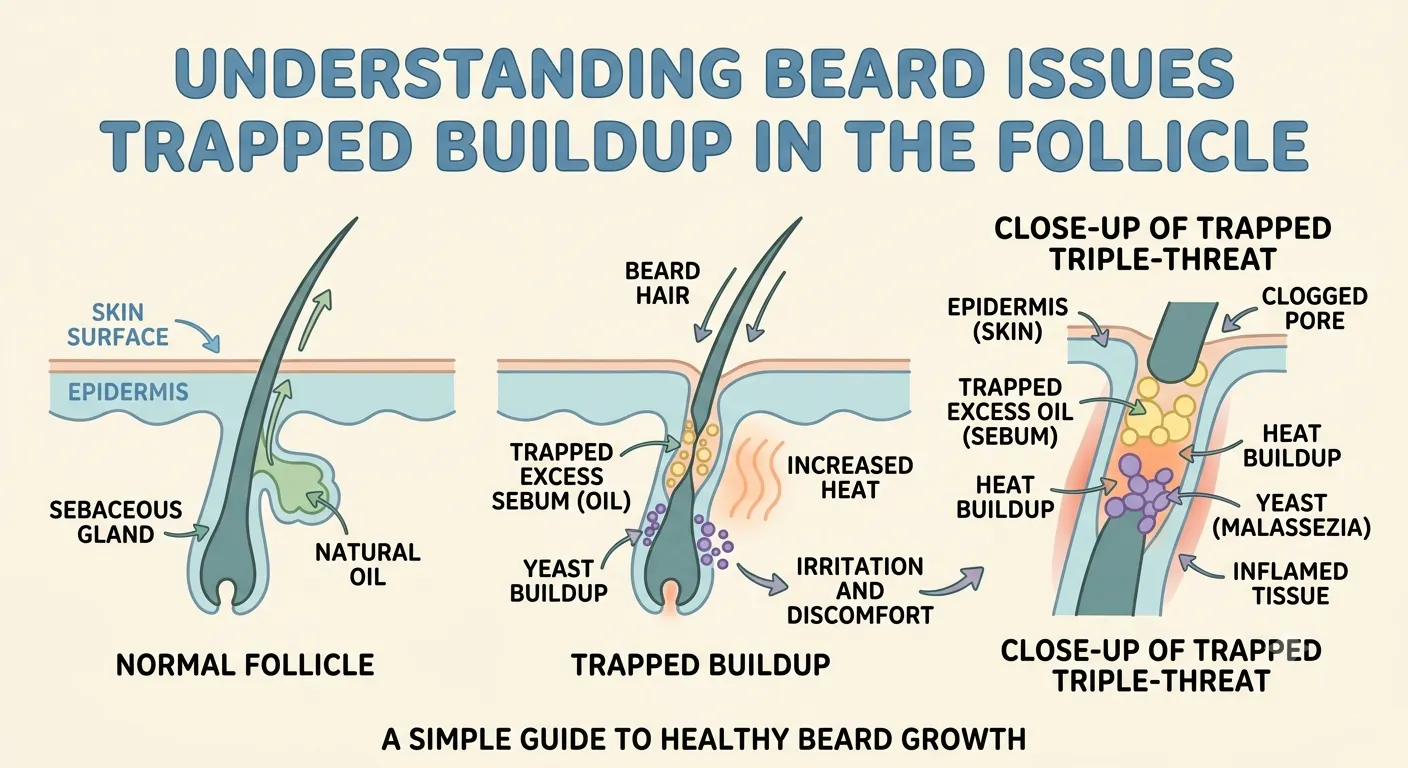
Longer facial hair can make it more difficult to cleanse and moisturise the skin effectively, allowing dryness and buildup to go unnoticed.
Skipping regular washes lets dead skin, sweat, and oil build up at the root, creating the exact conditions Malassezia needs to overgrow. On the flip side, washing with regular head shampoo or bar soap strips too much natural oil and can make dryness-related flaking worse. A dedicated beard wash formulated for facial skin avoids both problems.
Heavy waxes or highly occlusive styling products may contribute to product buildup, making flakes and irritation more noticeable if they aren’t washed away regularly.
In many parts of Australia, low humidity, strong UV exposure, and frequent air conditioning may contribute to skin dryness, which can make beardruff symptoms more noticeable.
Men who spend a lot of time outdoors or in air-conditioned offices often notice flaking gets worse in exactly those conditions, regardless of season. If skin issues extend beyond just your beard, our guide on common skin problems in Australian men covers this climate effect in more detail.
Some studies suggest that nutritional deficiencies, including low levels of zinc, B vitamins, and essential fatty acids, may contribute to flare-ups in susceptible individuals, although diet alone is not considered a direct cause of beardruff.
While stress and poor nutrition don’t directly cause beardruff, both can weaken the skin barrier and trigger flare-ups in people already prone to seborrhoeic dermatitis.
Beardruff doesn’t always appear the same in every person. Some men notice only a few dry flakes, while others develop persistent itching and inflamed skin beneath the beard. Recognising the symptoms early can help you choose the right treatment before the condition worsens.
| Symptom | What it usually looks like |
|---|---|
| White or yellow flakes | Loose flakes trapped in facial hair or falling onto clothing |
| Persistent itching | An ongoing urge to scratch, especially after sweating or at the end of the day |
| Red or inflamed skin | Irritated patches beneath the beard, particularly around the jawline and chin |
| Oily or greasy scales | Larger, slightly yellow flakes that stick to the skin or beard hairs |
| Tight, dry skin | A feeling of dryness or discomfort after washing |
| Irritation after grooming | Increased redness or burning after trimming, shaving, or using harsh cleansers |
If the skin becomes painful, develops thick crusts, starts oozing, or the rash spreads beyond the beard to areas such as the eyebrows, scalp, ears, or sides of the nose, the condition may be more than simple beardruff. In these cases, it’s best to seek medical advice from a GP or dermatologist rather than relying solely on home care.
Although beardruff can affect anyone with facial hair, certain factors make it more likely to develop or recur.
| Risk Factor | Why It Matters |
|---|---|
| Naturally oily skin | Produces more sebum, providing an ideal environment for Malassezia yeast |
| Family history of seborrhoeic dermatitis | Genetics may increase susceptibility to chronic flare-ups |
| Cold or dry weather | Reduces skin moisture and weakens the skin barrier |
| High stress levels | Stress may trigger inflammatory skin conditions in susceptible individuals |
| Weakened immune system | Can make inflammatory skin disorders more difficult to control |
| Certain neurological conditions (such as Parkinson’s disease) | Associated with a higher prevalence of seborrhoeic dermatitis |
| Infrequent beard cleansing | Allows oil, sweat, dead skin cells, and debris to accumulate beneath facial hair |
Having one or more of these risk factors doesn’t necessarily mean you’ll develop beardruff, but they can increase the likelihood of flare-ups. Following a consistent beard care routine can help minimise their impact.
Daily washing with a harsh cleanser strips too much oil and can worsen flaking, while going too long between washes lets buildup accumulate. A beard wash two to three times weekly hits the balance most men need.
Dead skin cells trapped under the beard are a direct contributor to flaking. Once a week, use a soft-bristled beard brush in circular motions before washing to lift dead skin and loosen buildup — never scrub hard, as broken skin makes irritation worse, not better.
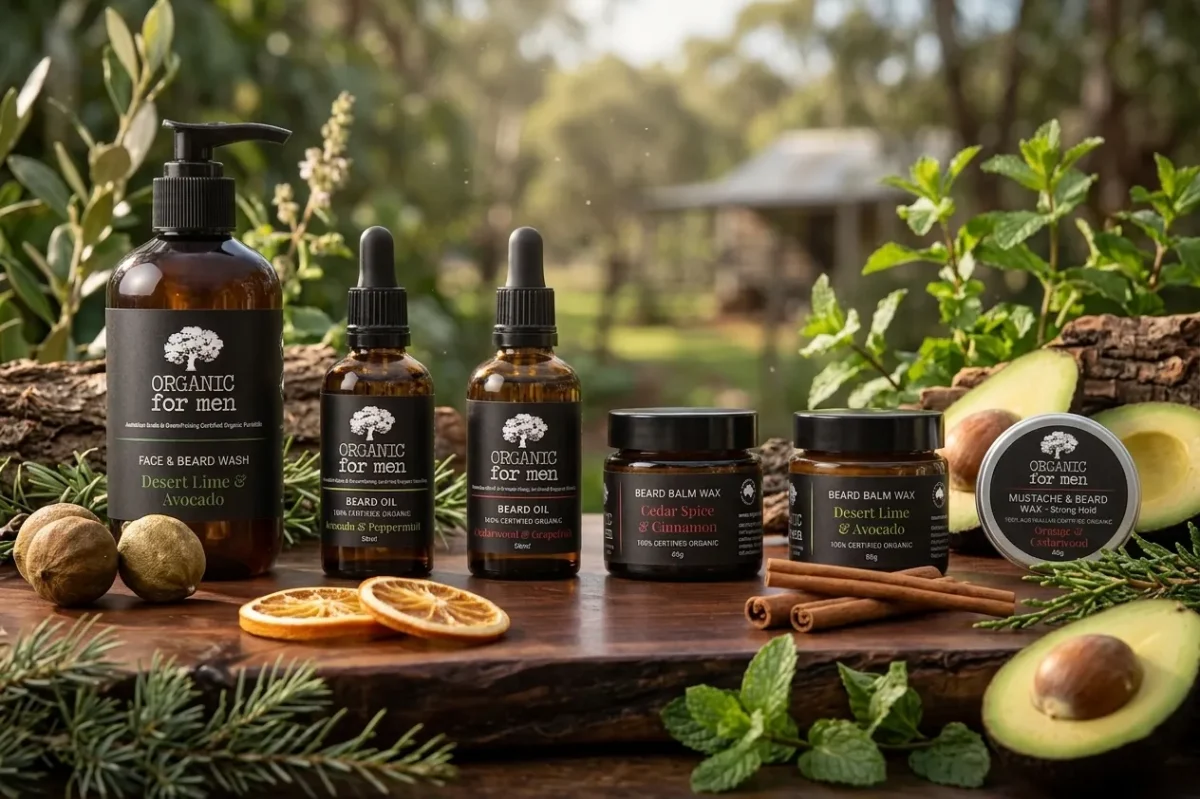
After cleansing, gently massage a few drops of beard oil into the skin beneath your beard while it is still slightly damp. Applying oil at this stage helps lock in moisture, supports the skin barrier, and reduces dryness-related flaking.
It’s important to remember that beard oil is not a treatment for seborrhoeic dermatitis or fungal overgrowth. Instead, its role is to improve skin hydration and comfort, making it a useful part of an overall beard care routine rather than a standalone cure.
If beardruff is primarily caused by seborrhoeic dermatitis, addressing the underlying inflammation or yeast overgrowth may require medical treatment in addition to moisturising the skin.
Thick, occlusive products can trap moisture and yeast against the skin rather than letting it regulate normally. Lighter, plant-based oils and balms reduce heavy occlusion that can trap oil and buildup against the skin while still hydrating — one of the reasons a beard balm with natural butters tends to work better here than a heavy wax-based product.
Most flaking-related routines take several weeks of consistency before visible improvement, since skin cell turnover isn’t instant. Stopping after a few days because “nothing’s changed” is the most common reason beardruff routines fail.
A consistent natural routine improves beardruff for many men, but it isn’t a universal fix. If flaking, redness, or itch hasn’t meaningfully improved after 3–4 weeks of consistent washing, exfoliating, and oiling, it may be worth trying an antifungal shampoo (containing ketoconazole, zinc pyrithione, or selenium sulfide) on the skin under the beard a few times a week alongside your regular routine.
If the area becomes increasingly red, painful, or starts spreading beyond the beard line — to the eyebrows, hairline, or sides of the nose, which are other common sites for this same condition — it’s worth seeing a GP or dermatologist rather than continuing to self-treat. Persistent or severe seborrhoeic dermatitis sometimes needs a prescription treatment that over-the-counter products can’t match.
For many people, improving beard hygiene and following a consistent skincare routine is enough to reduce mild beardruff. However, if symptoms persist or become more severe, a healthcare professional may recommend a medicated shampoo as part of your treatment plan.
Medicated shampoos should not be used as a self-diagnosed long-term solution. Although many are available over the counter, they contain active ingredients that may not be suitable for everyone and can sometimes cause irritation, dryness, allergic reactions, or interact with other skin conditions.
For the safest and most effective treatment, use these products only under the advice of a GP, dermatologist, or qualified healthcare professional, especially if:
The information below is provided for educational purposes only and is not intended to replace professional medical advice, diagnosis, or treatment.
If a consistent beard care routine hasn’t improved symptoms after several weeks, an antifungal shampoo may help reduce the yeast associated with seborrhoeic dermatitis.
| Active Ingredient | How It Works | Best Used For |
|---|---|---|
| Ketoconazole | Antifungal agent that reduces Malassezia yeast on the skin | Moderate to persistent beardruff with redness and itching |
| Zinc Pyrithione | Helps limit yeast growth while reducing inflammation | Mild to moderate dandruff and recurring flakes |
| Selenium Sulfide | Slows excessive skin cell turnover and reduces fungal activity | Oily scaling and stubborn flaking |
| Coal Tar | Slows skin cell production and reduces scaling | Selected chronic scaling conditions (less commonly used on facial skin) |
Use medicated shampoos only as directed and avoid prolonged contact with the eyes. If irritation worsens or symptoms persist, seek medical advice.
Shaving removes the visible symptom, not the cause — the skin condition underneath is still there, and beardruff typically returns once the beard grows back if the same routine gaps (washing, oiling, exfoliating) aren’t addressed. If you’re considering growing out again, our Beard Care Routine for Men walks through building the habits from day one so it doesn’t reappear.
Once it’s cleared, prevention is simpler than treatment: stick to the same 2–3x weekly wash and daily oil routine even after the flaking is gone, rather than stopping once symptoms disappear. For a full breakdown of building this into a lasting daily habit, see our 10 Essential Tips for a Healthy, Soft Beard, or browse the organic beard care range to put a routine together. The 3-Way Beard Grooming Set combines wash, oil, and balm in one system if you’d rather not piece it together separately.