
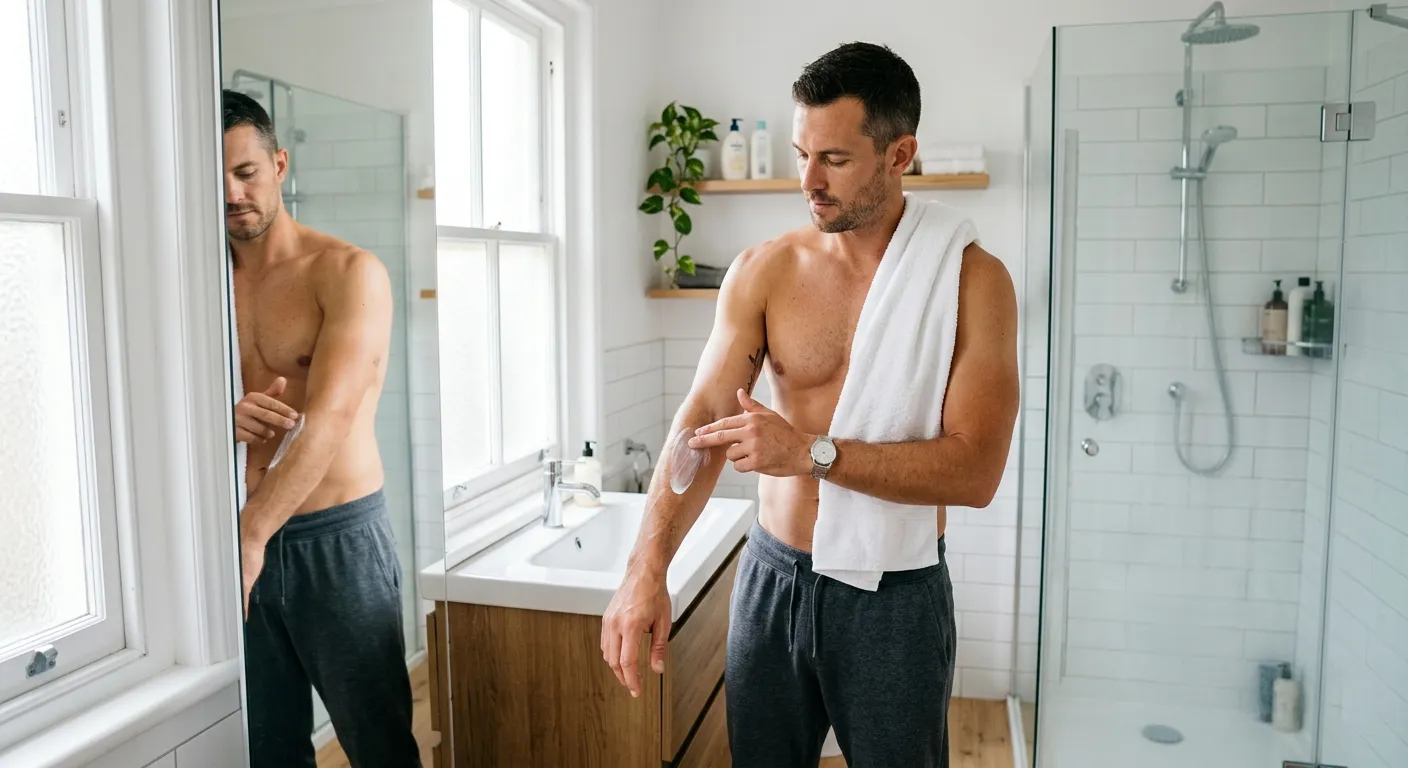
Most grooming guides for Australian men start — and stop — at the face.
But your skin doesn’t end at your jawline. Your body’s skin covers roughly 1.7 square metres of surface area, faces harsh UV radiation, survives sweaty workouts, endures Aussie heat and dry winters — and for most blokes, it receives nothing more than a quick scrub with whatever body wash is in the shower.
Most body skin problems aren’t caused by genetics — they’re caused by harsh cleansers, skipped moisturiser and inconsistent routines.
Whether you’re starting from scratch or want to build a smarter, cleaner routine using organic, chemical-free products, this is the complete Australian men’s body skin care guide — covering every step, every product, every skin type, and the exact order to do it all.
This is the pillar guide for Organic for Men’s body care content. Every section links to a deeper dedicated article.
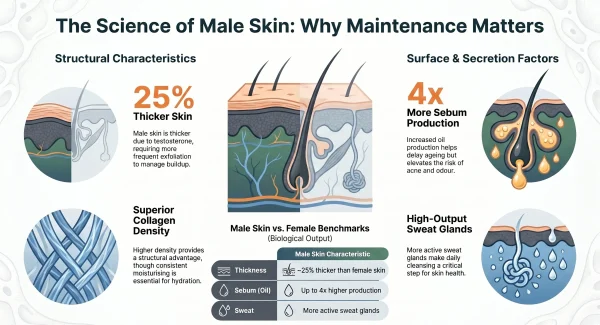
Here’s a fact most guides skip: male skin is structurally different from female skin in ways that change how body care works.
Understanding these differences is what separates an effective routine from a wasted one.
Australian skin fact: Australia has the highest rate of skin cancer in the world. UV damage doesn’t stop at the neck — body sun protection is a non-negotiable part of any men’s skin care routine here.
The reasons are predictable: grooming feels complicated, the marketing is confusing, and most products aren’t made with men’s skin — or the Australian climate — in mind.
The result? Chronic dry skin, body acne on the chest and back, rough patches on elbows and knees, ingrown hairs after shaving, and premature surface ageing from UV exposure and chemical overload.
A consistent, simple body care routine for men fixes all of this — and it doesn’t have to take more than five minutes a day.
Most men notice the biggest improvement in skin texture and dryness simply by changing two habits: switching away from harsh body wash and moisturising consistently after showers.
A complete men’s body skin care routine has four core steps. Two happen every day; two happen a few times a week. Here’s the full breakdown.
Every routine starts here. Cleansing removes sweat, oil, dirt, pollution and bacteria that accumulate on your body’s skin throughout the day — and it prepares the skin for every step that follows.
What most men get wrong: using a bar of soap that strips the skin barrier, or using the same product on the face and body. Body wash and face wash have different pH requirements. Never swap them.
What to look for in a men’s body wash: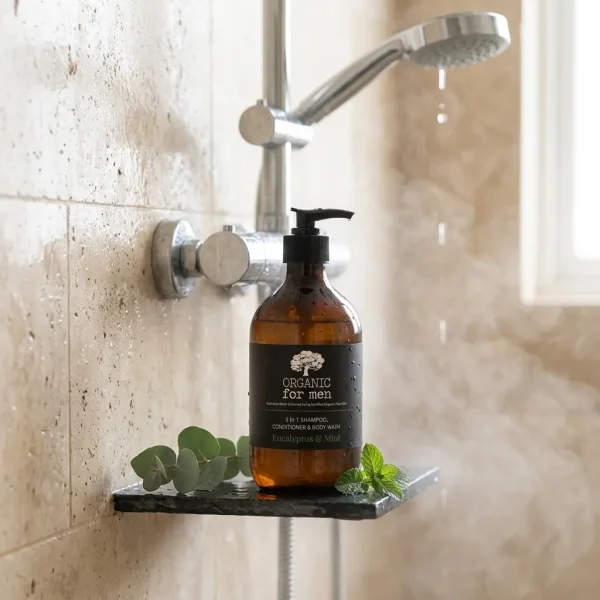
The skin barrier is the outer protective layer of the skin responsible for retaining moisture and defending against irritation, bacteria and environmental stress.
How to cleanse correctly:
Not all cleansers are created equal. This complete guide to body wash for men explains how to choose the right formula based on your skin type, lifestyle, and grooming routine.
Temperature tip: Hot showers feel good but are one of the biggest causes of dry, itchy body skin. Warm water achieves the same cleanse without drying damage.
Exfoliation is where most men’s body routines fall short — and where the biggest visible improvements happen fastest.
Many men notice smoother skin and fewer ingrown hairs within the first few weeks of consistent exfoliation.
Why it matters:
skin cells on the body’s surface turn over approximately every 28 days. Without exfoliation, dead cells accumulate, making skin look dull and feel rough, blocking pores, causing body acne and trapping ingrown hairs.
Because men’s skin is thicker and produces more oil, dead cell buildup happens faster than in women — making regular exfoliation even more important for men.
Frequency guide:
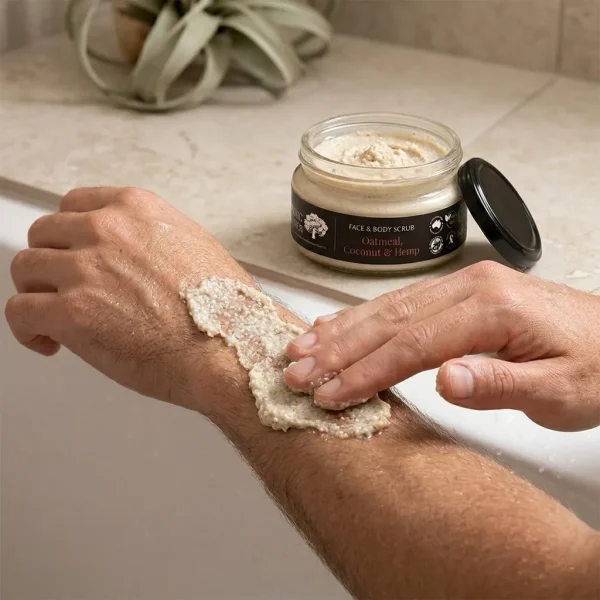
What to look for in a men’s body scrub:
How to exfoliate correctly:
Never exfoliate on sunburned, broken or inflamed skin. And don’t exfoliate daily — over-exfoliation damages the skin barrier and worsens sensitivity.
The biggest mistake men make with body moisturiser? Skipping it because they don’t feel ‘dry enough’. Hydration is about maintaining the skin barrier — not rescuing it after it’s already cracked and flaking.
A lot of men assume moisturiser is only necessary when skin already feels dry or flaky — but by that stage, the skin barrier is often already stressed.
The golden rule: moisturise within three minutes of stepping out of the shower. During that window, the skin is still slightly damp and the moisturiser locks in that surface moisture. After five minutes, the moisture evaporates and the opportunity is largely gone.
Types of body moisturisers and when to use them:
Understanding the difference between lotions, creams, and body oils can make it easier to build Body Moisturising routine that actually suits your skin type.
Lightweight, fast-absorbing and ideal for normal to oily skin or humid Australian weather.
Thicker and richer, designed for dry skin, winter weather and rough areas like elbows and knees.
Best for deep hydration and post-shower moisture retention. Particularly useful for men dealing with flaky skin or post-exfoliation dryness.
Ingredients to look for:
Ingredients to avoid:
Healthy skin isn’t just about cleansing and hydration — protecting the skin from environmental damage is equally important.

Australia has the world’s highest rate of skin cancer.Two in three Australians will be diagnosed with skin cancer by age 70. And yet, most men apply SPF to their face and forget everything below the collar.
Areas like the back of the neck, shoulders and forearms are often the first places Australian men show long-term sun damage.
Body sun protection is not a summer-only concern. UV radiation penetrates cloud cover and causes cumulative damage year-round.
Even areas covered by lightweight clothing still receive UV exposure over time.
When to apply body SPF:
What to look for:
Skin cancer is largely preventable. The Cancer Council Australia recommends SPF 50+ sunscreen applied 20 minutes before sun exposure and reapplied every two hours. Body skin care isn’t just about looking good — it’s about long-term health.
Not every step needs to happen every day — and the time of day matters.
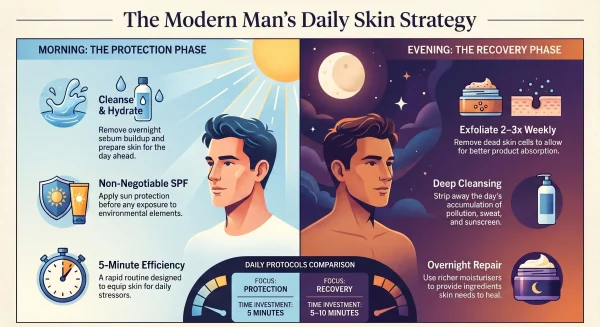
Body skin behaves differently to facial skin — and it can vary across different areas of the body. Here’s how to adapt your routine to your skin type.
Signs: tight feeling after showering, visible flaking on shins, elbows and knees, itchiness in cool weather.
Signs: body breakouts on chest, back and shoulders; clogged pores; persistent shine even after showering.
Men who train regularly often experience sweat congestion and rough texture across the upper back and shoulders.
Signs: redness or irritation after products, razor rash on body areas, reactive to fragranced products.
Signs: generally comfortable skin, some dry patches in winter or after sun exposure.
Understanding what’s in your products isn’t just for skincare obsessives — it’s the difference between choosing something that works and spending money on marketing.
Rich in omega-3 and omega-6 fatty acids in a ratio that mirrors the skin’s own lipid profile. Hemp seed oil supports the skin barrier, reduces inflammation and provides deep hydration without clogging pores. Found in our Body Wash and Hemp Body Scrub.
Technically a liquid wax that mimics human sebum. Non-comedogenic, absorbs quickly and balances oil production — making it suitable for all skin types including oily and acne-prone. Found in our Hydrating Body Oil.
A proven soothing and anti-inflammatory ingredient. Aloe vera hydrates without heaviness, reduces irritation after sun exposure and supports wound healing. Excellent for post-exfoliation and post-shave care.
Clinically proven to relieve itching and reduce inflammatory skin conditions. Oatmeal creates a protective film on the skin surface that reduces water loss — making it ideal for dry and sensitive skin. Found in our Hemp Body Scrub.
A gentle, biodegradable surfactant derived from coconut and glucose. Cleans effectively without stripping natural oils — the core cleansing agent in our Body Wash and alternative to harsh SLS/SLES.

The Australian market is less tightly regulated than many men assume. Products can carry terms like ‘natural’ or ‘fresh’ with no standard to meet. Here’s what to actually look out for on the ingredients list.
Organic for Men body products are free from all of the above. Every ingredient is listed in full on the product page with plain-English explanations — because you deserve to know what you’re putting on your body.
Australia’s climate demands more from your skin — and from your body care routine — than almost anywhere else in the world. Here’s how to adapt by season and region.
During Australian winters, dry patches on the shins and elbows are usually the first signs that the skin barrier is compromised.
Coastal men deal with salt air, sand exfoliation and chlorine exposure — all of which deplete skin moisture faster than average. Inland men face drier air and more extreme temperature variation. Both need consistent moisturising, adjusted for intensity.
Most body skin problems come from a small set of avoidable errors. Here’s what not to do.
| Step | Product | Time | Frequency |
| 1. Cleanse | Organic for Men Body Wash | Morning + Night | Daily |
| 2. Exfoliate | Hemp Body Scrub | Night Shower | 2–3x a week |
| 3. Moisturise | Body Oil / Body Moisturiser | After Shower | Daily |
| 4. Protect | SPF 50+ Body Sunscreen | Morning | Every sunny day |
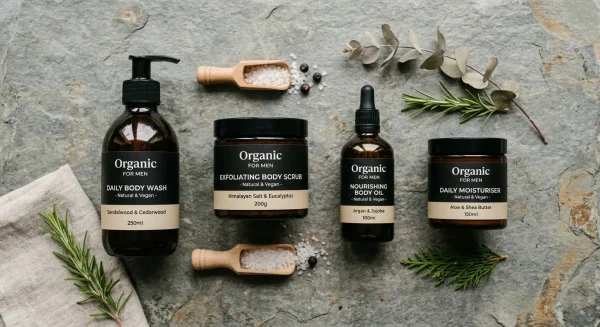
Every product in the Organic for Men body range is formulated with certified organic ingredients, made in Australia, free from sulphates, parabens, synthetic fragrance and petrochemicals.
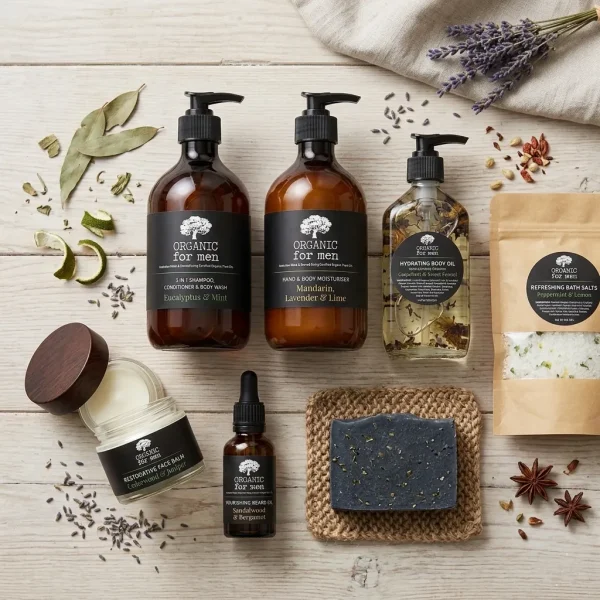
A sulphate-free, pH-balanced cleansing gel powered by coconut-derived surfactants and hemp seed oil. Removes sweat, oil and grime without stripping the skin barrier. Suitable for all skin types, including sensitive.
A physical exfoliant combining hemp seed hull, oatmeal and coconut for effective yet gentle dead skin removal. The oatmeal base soothes while it exfoliates — particularly effective for men dealing with rough texture, ingrown hairs or bacne.
A lightweight, fast-absorbing body oil built around jojoba, hemp and aloe vera. Applies to damp post-shower skin for maximum penetration. Non-greasy formula that won’t transfer onto clothing.
If you’ve never had a body skincare routine for men and this feels overwhelming, here’s the minimal entry point.
Just two products. One step each day.
That’s it. Two products. Two minutes. Your skin will show a noticeable difference within two weeks.
For most men, consistency matters far more than having a complicated 10-step grooming routine.
Once the cleanse-and-moisturise habit is established, introduce a body scrub two to three times per week.
Add targeted protection: body SPF for outdoor days, a body oil for deeper hydration on dry patches.
Consistency beats perfection. A simple routine done daily produces better results than a complex routine done occasionally. Start with two steps and build from there.
I’ve been trying to build a simple men’s body care routine without buying a dozen different products, and this guide was exactly what I needed. I liked that it explained why each step matters instead of just recommending products. The tip about moisturising right after a shower was something I’d never considered. Definitely one of the more practical men’s body care guides I’ve read.
I searched for what is a good body skin care routine and this article answered pretty much everything I wanted to know. I like that the routine is simple—cleanse, exfoliate, moisturise, and use sunscreen—without making it feel overwhelming. I’ve already started following it, and my skin feels noticeably smoother after just a couple of weeks.