
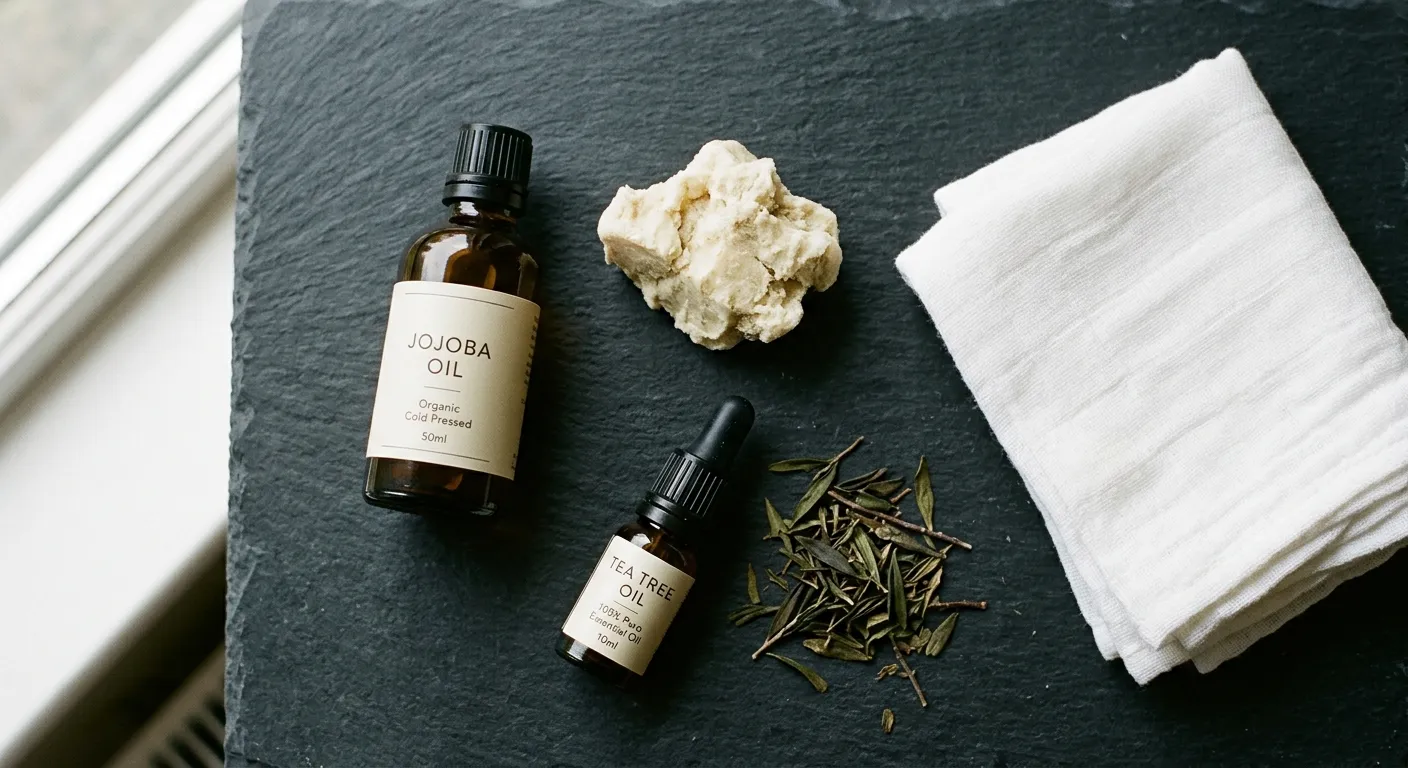
Walk down any skincare aisle and you’ll see the same three names on almost every label: jojoba oil, shea butter, tea tree oil. Brands love throwing them on packaging because they sound clean and natural — but very few actually explain what each one does, who it’s for, or how to use it properly.
This guide breaks down the science (in plain English) behind these three ingredients, so you know exactly why they’re in your grooming products — and how to get the most out of them.
Words like “natural” and “organic” on a bottle don’t tell you much on their own. What actually matters is the INCI name (the official ingredient name on the label) and what that ingredient does at a molecular level — does it moisturise, does it fight bacteria, does it clog pores?
Understanding the ingredients list is the difference between picking a product that actually works for your skin type and paying for marketing. If you want to see the full list of what goes into every formula we make, our ingredients page breaks down every plant oil and extract we use.
Jojoba oil (pronounced hoh-HOH-buh, INCI: Simmondsia Chinensis Seed Oil) isn’t technically an oil — it’s a liquid wax pressed from the seed of a desert shrub native to Arizona, California and Mexico. That wax structure is the reason it behaves so differently from other plant oils.
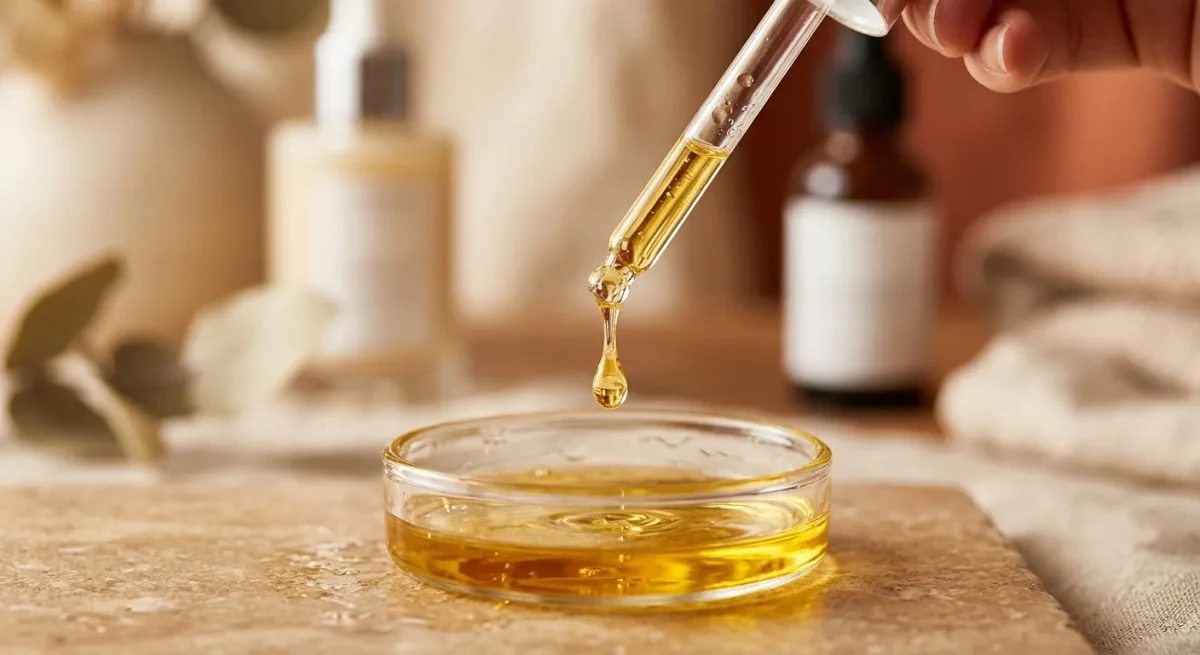
Almost anyone — but it’s especially useful if you have oily, combination, or acne-prone skin, since it hydrates without adding extra grease. It’s also one of the best oils for men managing beard itch and dandruff in the first few weeks of growth.
A few drops after cleansing, on damp skin, locks in moisture without heaviness. For beards, work it in daily from root to tip.
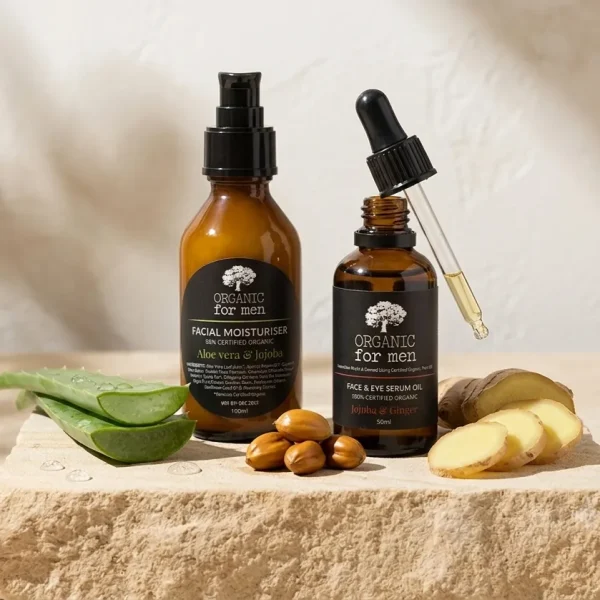
Our Face & Eye Serum Oil with Jojoba & Ginger is built specifically around this ingredient for exactly this reason.
Facial Moisturiser with Aloe Vera & Jojoba pairs it with shea butter for daily hydration.
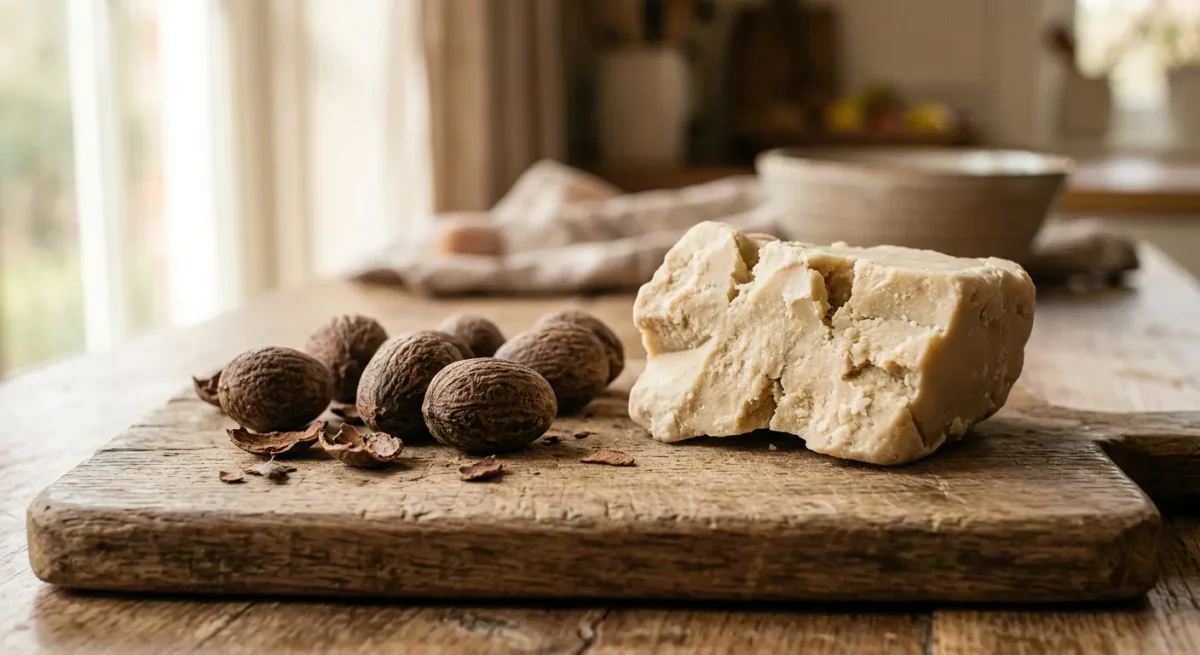
Shea butter (INCI: Butyrospermum Parkii Butter) is extracted from the nut of the shea tree, native to West Africa. Unlike jojoba oil, it’s solid at room temperature and melts on contact with skin — a classic emollient and occlusive ingredient.
| Butter | Feel on Skin | Best For | Comedogenic Rating |
|---|---|---|---|
| Shea Butter | Rich but absorbs well | Dry skin, beard, chapped areas | Low (0–2) |
| Cocoa Butter | Very heavy, waxy | Body only, not face | Higher (3–4) |
| Mango Butter | Lighter, softer | Sensitive/combination skin | Low (0–2) |
Shea sits in the sweet spot — rich enough to genuinely fix dry skin, but light enough that it’s used on the face without clogging pores the way cocoa butter tends to.
It shines in beard balms and waxes, where it needs to soften coarse hair and moisturise the skin underneath without stripping hold. Our Cedar Spice & Cinnamon Beard Balm uses shea butter as its moisture base for exactly this reason, and it’s also blended into our Moisturising Conditioner to soften and add shine to hair. Browse the full Beard range if itch and dryness are your main issue.
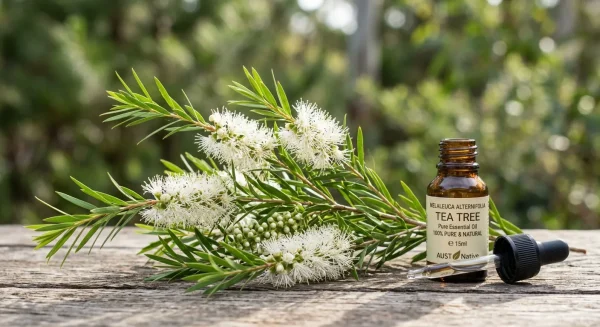
Tea tree oil (INCI: Melaleuca Alternifolia Leaf Oil) is steam-distilled from the leaves of a tree native to Australia’s east coast — it’s one of the few globally famous skincare ingredients that’s actually homegrown here.
This is the part most ingredient guides skip. Tea tree oil is potent — undiluted tea tree oil can irritate or sensitise skin, especially on the face. It should never be applied neat; it’s meant to be used at low concentrations (typically 1–5%) blended into a carrier oil or finished formula, not straight from a bottle onto skin. If you’re patch-testing a new product with tea tree oil, apply a small amount to your inner arm first and wait 24 hours.
Never ingest tea tree oil and Avoid contact with the eyes and mucous membranes.
Anyone dealing with oily skin, breakouts, ingrown hairs, or scalp irritation. If that’s you, our Best Skincare Routine for Oily Skin guide goes deeper into building a full routine around ingredients like this one.
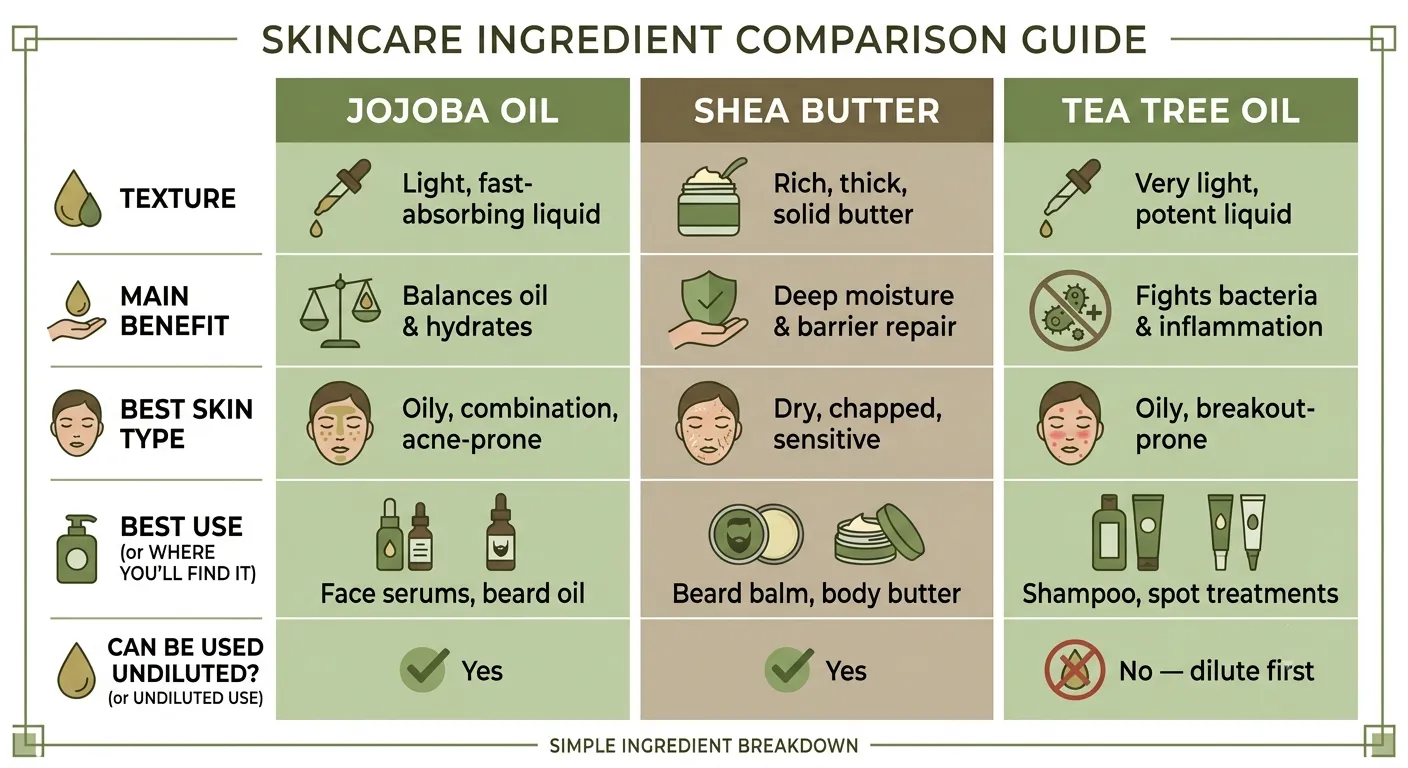
| Jojoba Oil | Shea Butter | Tea Tree Oil | |
|---|---|---|---|
| Texture | Light, fast-absorbing liquid | Rich, thick, solid butter | Very light, potent liquid |
| Main Job | Balances oil & hydrates | Deep moisture & barrier repair | Fights bacteria & inflammation |
| Best Skin Type | Oily, combination, acne-prone | Dry, chapped, sensitive | Oily, breakout-prone |
| Where You’ll Find It | Face serums, beard oil | Beard balm, body butter | Shampoo, spot treatments |
| Can Be Used Undiluted? | Yes | Yes | No — dilute first |
None of these ingredients are meant to work alone. In a well-designed routine, they cover different jobs:
That’s essentially why they show up together across skincare ranges instead of as standalone products — a face wash with tea tree, a serum with jojoba, and a balm with shea cover the full cycle. Our Face range is built around exactly this layering logic, and the complete skincare routine for men walks through the order to apply everything.
A few practical checks before you buy:
If you’d rather skip the label-reading altogether, our Shop has the full certified organic range, all formulated with these actives at effective concentrations — and the Gift Sets are a solid way to try a few products across face, beard and body at once.
“Natural means it can’t irritate skin.”
False — tea tree oil is the clearest example. Natural ingredients can still be potent enough to cause reactions at the wrong concentration.
“Oily skin should avoid oils like jojoba.”
False — jojoba oil is one of the few oils that can actually help regulate oil production rather than add to it.
“Shea butter will clog pores because it’s thick.”
Mostly false — shea butter… shea butter has a low comedogenic rating; it’s rich in feel but doesn’t sit on the skin’s surface the way heavier occlusives like coconut oil or cocoa butter can.
Whether you’re managing dry skin, beard itch or breakouts, understanding how these ingredients work makes it much easier to choose products that genuinely suit your skin rather than relying on marketing claims. Explore our skincare range to find formulas built around these proven ingredients.