
Australian men commonly experience skin issues caused by sun exposure, heat, sweat, dry air, and daily environmental stress.
The most common skin problems include:
The best way to prevent most skin problems is to follow a simple skincare routine that includes gentle cleansing, regular moisturising, sun protection, and occasional exfoliation. Consistent skin care can help improve skin comfort, reduce irritation, and support healthier-looking skin throughout the year.
If you’re an Australian man who’s never paid much attention to skincare, you’re definitely not alone. For years, skin care was often marketed in ways that made many men feel it simply wasn’t relevant to them — until problems like persistent dryness, oily skin, razor irritation, redness, sun spots, or suspicious moles started becoming impossible to ignore.
But in Australia, skin health isn’t just about appearance.
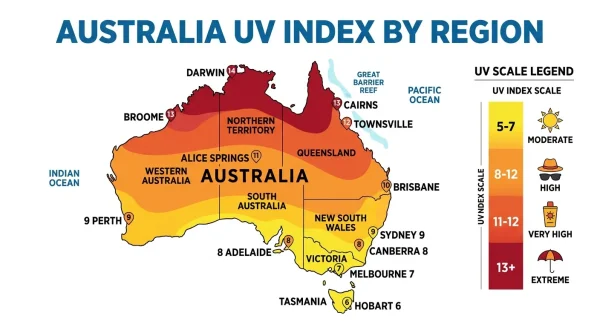
Australia has one of the highest rates of skin cancer in the world, and men are disproportionately affected. According to Cancer Australia estimates, more than 10,000 Australian men are expected to be diagnosed with melanoma this year alone, with men accounting for the majority of melanoma-related deaths.
And while skin cancer is the most serious concern, it’s far from the only one. Australian men commonly deal with oily skin, adult acne, shaving irritation, eczema, rosacea, sun damage, and chronic dryness — often made worse by harsh weather, strong UV exposure, outdoor work, sweat, and years of using the wrong products or no products at all.
The good news is that most of these conditions are manageable with the right habits, early detection, and a simple routine that actually fits real life.
This guide covers the most common skin problems affecting Australian men, what causes them, how to recognise them early, and the treatments that genuinely help — without unnecessary fluff or complicated 12-step routines.
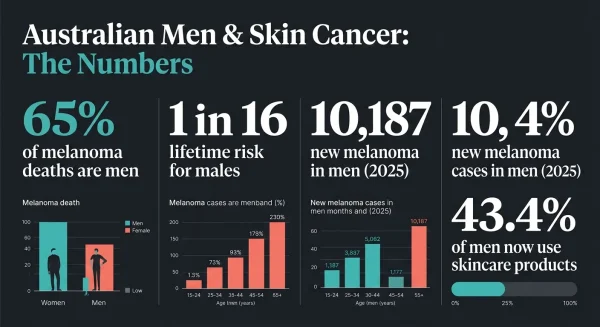
Australia experiences some of the highest UV levels in the world due to geographic and environmental factors. During summer, the UV Index regularly reaches extreme levels, and that exposure adds up over decades — especially for men who spend long hours outdoors.
Tradies, landscapers, farmers, surfers, runners, athletes, and outdoor workers often receive far more sun exposure than they realise. Many Australian men also underestimate cumulative UV damage because the effects build slowly over time rather than appearing immediately.
Even everyday habits like driving, weekend sport, walking outdoors, or sitting near windows contribute to long-term skin ageing and increased cancer risk.
Men’s skin tends to be thicker, oilier, and more prone to congestion due to higher testosterone and androgen activity. That’s one reason conditions like acne, enlarged pores, and excess oil production are especially common in men.
Facial hair and regular shaving also create repeated friction and micro-irritation, increasing the likelihood of razor bumps, ingrown hairs, and inflammation.
At the same time, many products marketed toward men rely heavily on harsh cleansers, alcohols, and aggressive fragrances that can weaken the skin barrier and worsen irritation over time.
A large number of Australian men wait until a skin issue becomes painful, severe, or highly visible before seeking professional advice. This is particularly concerning when it comes to skin cancer, where early detection dramatically improves outcomes.
Many men also ignore chronic redness, eczema, persistent acne, or suspicious spots for years assuming they’ll eventually “go away on their own.”
Unfortunately, skin problems rarely improve through neglect alone.
Who it affects: All Australian men, particularly those over 40, fair-skinned individuals, and people with high outdoor exposure.
Skin cancer remains the most common cancer in Australia, and men continue to face the highest risk.
Key statistics include:
Melanoma is the most dangerous form of skin cancer because it can spread rapidly to other parts of the body if not detected early.
In Australian men, melanoma commonly appears on the:
It may appear as a new mole or an existing mole that changes over time.
BCC is the most common skin cancer type. It usually grows slowly but can still cause major tissue damage if left untreated.
It often appears as:
SCC is more aggressive than BCC and may spread if ignored.
Common signs include:
| Letter | What It Means |
|---|---|
| A – Asymmetry | One side doesn’t match the other |
| B – Border | Irregular or blurred edges |
| C – Colour | Uneven colours or multiple shades |
| D – Diameter | Larger than 6mm |
| E – Evolving | Any noticeable change over time |
Most skin cancers are highly treatable when caught early.
Daily protection should include:
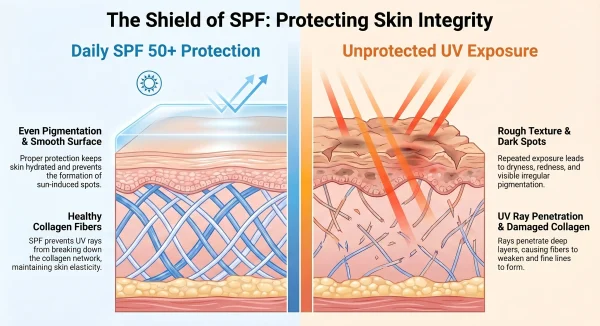
Australian men who work outdoors should also consider keeping sunscreen in vehicles, work bags, and tool kits to encourage consistent use.
Book a professional skin check if:
Annual skin checks are strongly recommended for Australian men, especially those with extensive sun exposure or a family history of skin cancer.
Who it affects: Men with long-term UV exposure, especially outdoor workers and active lifestyles.
Sun damage is one of the biggest causes of premature skin ageing in Australian men.
Years of UV exposure gradually break down collagen and elastin, damaging both the appearance and structure of the skin.
One of the most important warning signs of chronic sun damage is actinic keratosis.
These are:
that develop from cumulative UV exposure and may become cancerous over time if untreated.
Many Australian men dismiss them as “dry skin” for years.
Retinoids help improve:
Beginners often start with retinol before progressing to prescription tretinoin under medical guidance.
Vitamin C provides antioxidant support and may help brighten uneven skin tone caused by sun exposure.
AHAs and BHAs can improve rough texture and clogged pores when used consistently.
Dermatologists may recommend:
Who it affects: Most commonly younger men, though many continue experiencing oily skin well into adulthood.
Oily skin is extremely common in men due to higher sebum production driven by hormones.
Many men try to “scrub away” oil using harsh soaps, alcohol-heavy cleansers, or over-washing.
This often backfires.
When the skin barrier becomes stripped and dehydrated, the skin may respond by producing even more oil.
If oily skin, enlarged pores, or constant shine are ongoing issues, following a dedicated oily skin routine can help balance sebum production without over-drying the skin. Read our complete guide to building an effective oily skin routine for men.
Use a gentle cleanser twice daily rather than aggressive soaps designed to leave the skin feeling tight.
Niacinamide helps regulate oil production while supporting the skin barrier.
Salicylic acid penetrates oily pores and helps reduce congestion and blackheads.
Even oily skin requires hydration. Skipping moisturiser can worsen dehydration and rebound oiliness.
Used once or twice weekly, clay masks can help absorb excess oil without excessive irritation.
Who it affects: Teenagers, men in their 20s and 30s, and even older adults.
Adult male acne is more common than many people realise.
In Australia, acne is frequently aggravated by:
| Acne Type | Description | Common Causes / Triggers |
|---|---|---|
| Comedonal Acne | Blackheads and whiteheads caused by clogged pores. | Excess oil, dead skin buildup, clogged follicles |
| Inflammatory Acne | Red, swollen pimples and pustules. | Bacteria, inflammation, excess sebum |
| Nodular or Cystic Acne | Deep painful lumps under the skin that often leave scars and require medical treatment. | Severe inflammation, hormonal factors |
| Acne Mechanica | Acne triggered by friction and pressure on the skin. | Helmets, hats, backpack straps, tight gym clothing |
Helpful ingredients include:
A GP may prescribe:
Dermatologists may recommend isotretinoin (Roaccutane) for severe persistent acne.
Squeezing pimples significantly increases the risk of:
Who it affects: Men who shave regularly, especially those with coarse or curly hair.
Razor bumps occur when shaved hairs curl back into the skin and trigger inflammation.
This condition is extremely common but often treated incorrectly.
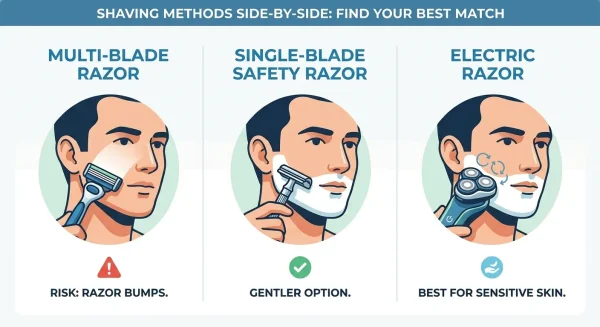
Men with longer facial hair should also follow a proper beard care routine to reduce dryness, trapped oil, irritation, and ingrown hairs. Using beard-friendly cleansers and moisturising products can help keep both the hair and underlying skin healthier over time.
Learn more in our complete beard care routine guide.
Salicylic acid and glycolic acid can help reduce ingrown hairs and post-shave congestion.
For chronic pseudofolliculitis barbae, medical treatments may include:
Who it affects: Men of all ages.
Eczema causes chronic inflammation, dryness, and severe itching.
Australia’s climate can worsen eczema due to:
This is the foundation of eczema management.
Apply fragrance-free moisturiser:
Use:
Who it affects: Most commonly fair-skinned men aged 30–60.
Rosacea causes chronic facial redness and sensitivity and is often mistaken for acne or simple flushing.
Men frequently develop more severe rosacea because they delay treatment longer.
One severe form of rosacea can cause thickening of the nose tissue, known as rhinophyma.
This condition occurs far more commonly in men and may become permanent without treatment.
Early treatment can significantly reduce progression.
Who it affects: Around 2–3% of Australians.
Psoriasis is an autoimmune condition that speeds up skin cell turnover, causing thick scaly plaques.
Psoriasis is not contagious.
However, it is associated with:
Controlled UVB therapy can improve symptoms under medical supervision.
More severe psoriasis cases may require systemic medications or biologic therapies prescribed by a dermatologist.
This is the ideal time to prevent long-term damage.
Focus on:
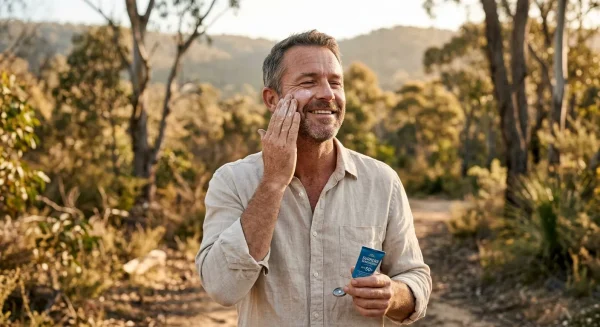
This is often when early sun damage and uneven skin tone become more noticeable.
Helpful additions include:
Skin cancer risk and collagen loss become increasingly important.
Focus on:
You do not need a complicated routine.
Consistency matters far more than using dozens of products.
Australian men who spend long hours outdoors may also benefit from:
Discover premium Australian-made organic grooming products for men at Organic For Men, crafted with natural ingredients for healthier skin, hair, and beard care.
See a GP or dermatologist if you notice:
Trust your instincts. Early treatment almost always leads to better outcomes.
Australian men deal with unique skin challenges due to climate, UV exposure, outdoor lifestyles, and delayed treatment habits. The good news is that most common skin conditions — from acne and razor bumps to eczema and sun damage — can be managed effectively with early care and consistent habits.
A simple routine, regular skin checks, and daily sun protection can dramatically improve both short-term skin health and long-term wellbeing.
Medical & Statistical Sources:
Australian Bureau of Statistics
Australian Institute of Health and Welfare